



















Epoxy Resin Mixing & Pouring 101
Whether you are creating a bar top for your business, or crafting a custom river table, or preserving a family photo, learning how to use resin effectively is the first step toward a glass-like, durable finish. While the results look like magic, the process is actually a science. This guide covers the essential best practices for mixing epoxy resin, avoiding common pitfalls, and achieving a flawless pour.
What is Epoxy Resin?
Before you open the bottles, let's start with the basics. Epoxy is a two-part system, where resin and hardener components create a chemical reaction when mixed together. This exothermic reaction generates heat, which solidifies the liquid components into a hard plastic.
There are few factors that can impact the reaction, including: epoxy type, humidity/moisture in the air, accuracy and temperature.
- Epoxy Type: Not all formulas cure at the same rate, so it’s important to know which kind you’re working with and the cure rates for that specific epoxy.
- Humidity: Humidity introduces moisture that can interfere with epoxy’s curing reaction by reacting with the hardener, disrupting the resin-to-hardener bond and potentially causing issues like improper cure, cloudiness, or surface amine blush.
- Accuracy: While many epoxy systems use a 1:1 mix ratio, others require 2:1 or even 5:1, so following the correct ratio is critical. Mixing inaccurately can prevent the epoxy from curing properly.
- Temperature Matters: The ideal working temperature for most epoxies is between 70°F and 80°F. If it is too cold, the resin becomes thick and holds onto bubbles; if it is too hot, it may set too quickly or crack. If your working in colder temperatures, consider warming up your space before mixing and pouring.

Prepare Before You Mix and Pour Epoxy
Ensure your workspace is level and dust-free. Gather your safety gear, including gloves, protective clothing, and a filter mask, and protect your table with a silicone mat or plastic sheeting.
It’s also important to prep the surface you’ll be pouring epoxy onto. Proper surface prep helps epoxy bond correctly, flow evenly, and cure with a clear, professional-looking finish.
Key prep considerations before pouring epoxy:
- Seal bare wood first: Porous wood can release trapped air and absorb epoxy unevenly, leading to bubbles and dry spots. Applying a thin seal coat and letting it cure helps lock in air, stabilize the surface, and create a smooth base for the main pour.
- Account for different wood types: Softwoods, reclaimed lumber, and live-edge slabs are more porous and usually benefit from sealing, while hardwoods may still need a seal coat around knots, cracks, and exposed end grain.
- Prep previously finished surfaces: Painted, varnished, or sealed surfaces should be clean, dry, and lightly sanded to create a good mechanical bond. Always remove sanding dust and contaminants before pouring.
- Prepare non-wood surfaces properly: Metal, concrete, and other hard surfaces should be clean, dry, and scuff-sanded when appropriate to improve adhesion. Some plastics and silicone molds require mold release if epoxy is not intended to bond permanently.
- Match the epoxy to the material: Thin, penetrating epoxies are often used for sealing and stabilizing, while table top and deep pour epoxies are designed for coating and casting over properly prepped surfaces. Using the right formula helps avoid curing and adhesion issues.
- Protect yourself and your workspace: Always wear personal protection equipment (PPE) when handling epoxy resin. We recommend gloves, an apron or other clothing protection, and a mask (if the space is not well-ventilated). Use plastic sheeting or a silicone mat to prevent damage from spills and make cleanup easier.

Step 1: Measure Accurately
Sticky or soft spots usually come from mixing epoxy at the wrong ratio, so learning how to measure and mix it correctly is key to getting a proper cure.
- Know Your Ratio: Epoxy resins are formulated with specific mix ratios, and those ratios can vary by product. Many table top and art epoxies use a 1:1 ratio by volume, meaning equal parts resin (Part A) and hardener (Part B). Other formulas, such as some marine or structural epoxies, may use different ratios like 2:1 or 3:1. Always follow the exact ratio listed on your product’s instructions.
- Volume vs. Weight: Be careful not to confuse volume with weight. Resin and hardener often have different densities, so a mix ratio by volume will not match the same ratio by weight. Measuring by weight without guidance can lead to improper curing, so always confirm whether your epoxy is designed to be mixed by volume or by weight.
- Accuracy: While many epoxy systems use a 1:1 mix ratio, others require 2:1 or even 5:1, so following the correct ratio is critical. Mixing inaccurately can prevent the epoxy from curing properly.
- Use an Epoxy Resin Calculator: To avoid wasting epoxy or running short mid-pour, calculate how much you need before you start. A resin calculator lets you plug in your project’s length, width, and pour depth to estimate the correct amount for your specific application.

Pro Tip: Some epoxy systems use mix ratios other than 1:1. For TotalBoat epoxies with specific ratios, tools like calibrated pumps and metering pump dispensers are available to help dispense resin and hardener accurately with less guesswork. Calibrated pumps attach directly to epoxy containers for convenient batch mixing, while larger metering pump systems are designed for users who transfer resin and hardener into dedicated dispensers. Using pumps designed for the exact formula makes it easier to stay on-ratio whether you’re mixing small amounts or larger batches.
Step 2: The Art of Mixing Epoxy
The most critical step in the process is mixing epoxy resin. If not stirred properly, the components won't react as well and you'll end up with an incomplete cure.
Steps for Proper Mixing
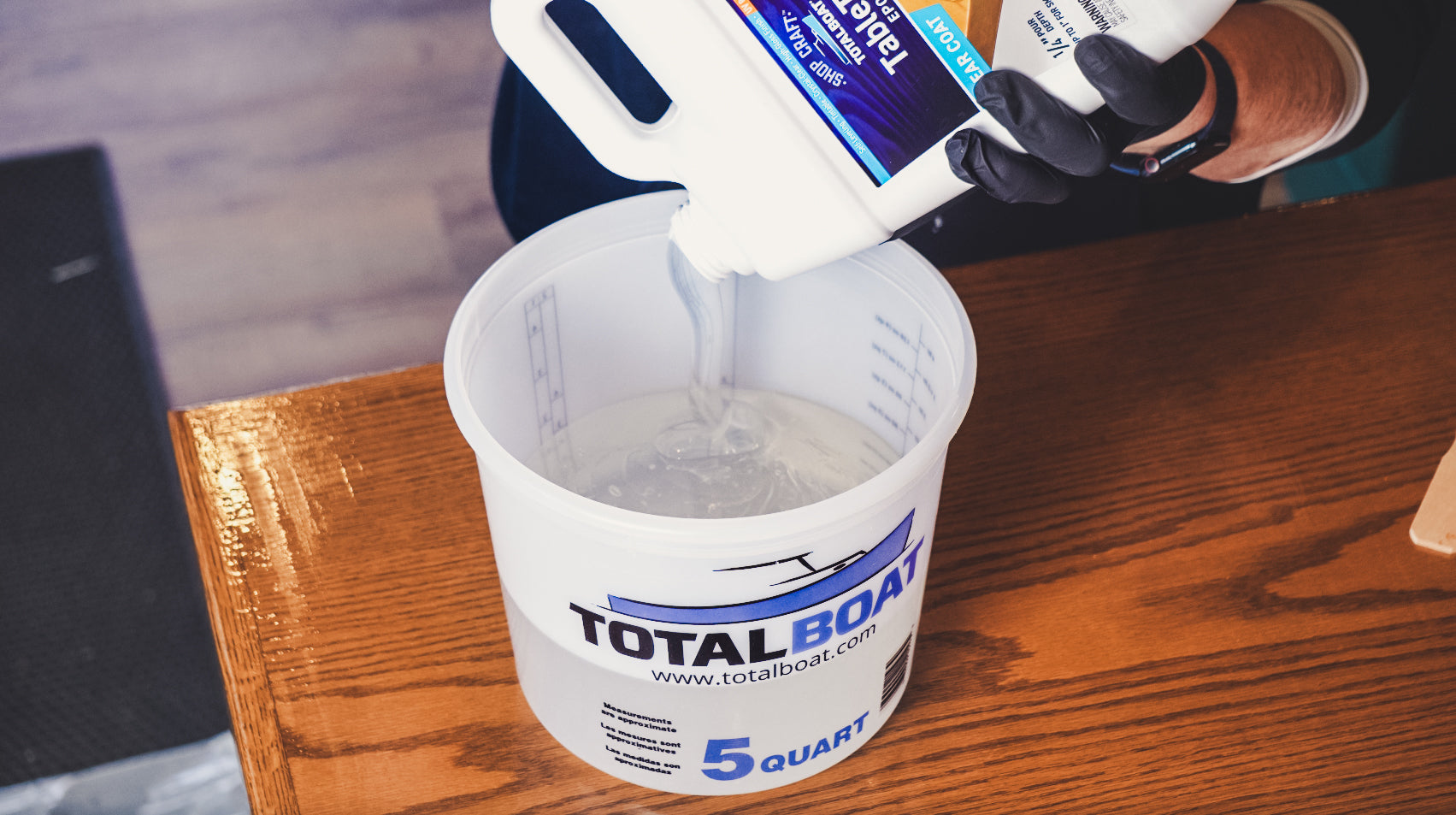
- Combine: Pour your measured Part B (hardener) into Part A (resin) in a clean, appropriately sized mixing container, such as a graduated plastic mixing cup.
- Stir Slowly: Use a stir stick to mix by hand. Stir thoroughly but slowly, scraping the sides and bottom of the container to ensure everything is fully blended without introducing excess air.
Pro Tip for Wooden Stir Sticks: For best results, we recommend sealing the stir stick with epoxy first to minimize bubbles and moisture exposure. Use the flat edges or cut one rounded edge flat for even scraping and mixing in the cup.
Pro Tip for Large Volumes:
Use a helix mixer drill attachment when mixing epoxy in large amounts to ensure a consistent blend throughout. - Scrape the Container: This is the golden rule of mixing epoxy. You must scrape the sides and the bottom of the cup while stirring. If you don't, unmixed material clinging to the sides will end up in your pour and cause soft, uncured spots.
- Watch for Ribbons: As you mix, the liquid will look cloudy or have streaks. You know you are making progress when these "ribbons" or streaks disappear, and the mixture becomes clear.
The Two-Cup Method
For the best results, we recommend a two-cup mixing process:
- Mix 1: Mix in your first cup for 3–5 minutes, scraping the sides and bottom of the cup as you stir. This helps fully combine both components and reduces the risk of an improper cure caused by incomplete mixing.
- Transfer: Pour the mixed epoxy into a second, clean mixing cup. This step helps isolate the fully blended epoxy from any material that may remain clinging to the first cup after mixing.
- Mix 2: Mix in the second cup for another 2–3 minutes, again scraping the sides and bottom, to ensure a uniform, well-combined mixture before pouring
Optional: Tint with Color
If you are adding color to your epoxy, mixing pigment evenly is key.
To add color, you can use mica powders, alcohol inks, or pigment dispersions. The best time to add color is after the resin and hardener have been fully mixed but before you pour.
- Start with a small amount of pigment, as a little goes a long way.
- Mix thoroughly until the color is uniform. If using mica powder, ensure there are no clumps of powder remaining.
Tip: If using multiple colors, separate your clear mixed resin into different cups before adding the pigments.

Above: Adding mica powder into epoxy resin.
Step 3: How to Pour Epoxy Resin
Once your epoxy is mixed, you have a limited working time before it begins to thicken and set. This working time varies depending on the epoxy formula, batch size, and ambient temperature, so it’s important to be ready to pour as soon as mixing is complete.
As epoxy begins to gel, it transitions from a free-flowing liquid to a thicker, more viscous state. At this point, the chemical reaction has started to advance, the epoxy will no longer self-level properly, and it becomes difficult to pour or spread smoothly. Pouring after the epoxy has begun to gel can result in uneven surfaces and visible defects.
Seal Coats
For porous surfaces like wood, starting with a seal coat helps prepare the surface for later pours. A seal coat is a thin layer of epoxy applied with a brush or spreader to seal exposed fibers, cracks, and end grain. This step helps reduce bubbles caused by air escaping from the material and creates a more uniform base for subsequent coats. On very porous or degraded wood, a penetrating epoxy may be used to stabilize the surface before moving on to thicker applications.
Pouring for Different Applications
Epoxy pouring techniques vary depending on the project and the type of epoxy being used.
- Flood coats and surface coatings: Pour epoxy slowly in a controlled pattern, such as starting in the center or using a zigzag motion, to help distribute material evenly. Most coating epoxies are self-leveling, allowing the resin to naturally flow out and create a smooth surface with minimal spreading.
- Casting molds and deep pours: When filling molds or voids, pour steadily to avoid trapping air and follow the manufacturer’s guidance for maximum pour depth. Deep pour and casting epoxies are formulated to be poured thicker in a single pass than coating epoxies.
- Scrape the Container: This is the golden rule of mixing epoxy. You must scrape the sides and the bottom of the cup while stirring. If you don't, unmixed material clinging to the sides will end up in your pour and cause soft, uncured spots.
- Artwork and thin coatings: For artwork, panels, or mixed-media projects, epoxy is often applied in thinner layers to control flow, encapsulate elements, or build depth gradually.
If you’re not sure which epoxy formula is best for your project, check out this selection guide to help you choose the right resin for coating, casting, or sealing.
Pour Thickness and Pour Depth
Aways follow the product-specific guidelines for maximum pour depth and layer thickness. Different epoxy formulas are designed for different applications—some are meant for thin coats, while others are engineered for deeper pours. Exceeding the recommended pour depth can lead to overheating, surface defects, or curing issues. When additional thickness is needed, many projects benefit from pouring in multiple layers, allowing each layer to partially cure before applying the next.

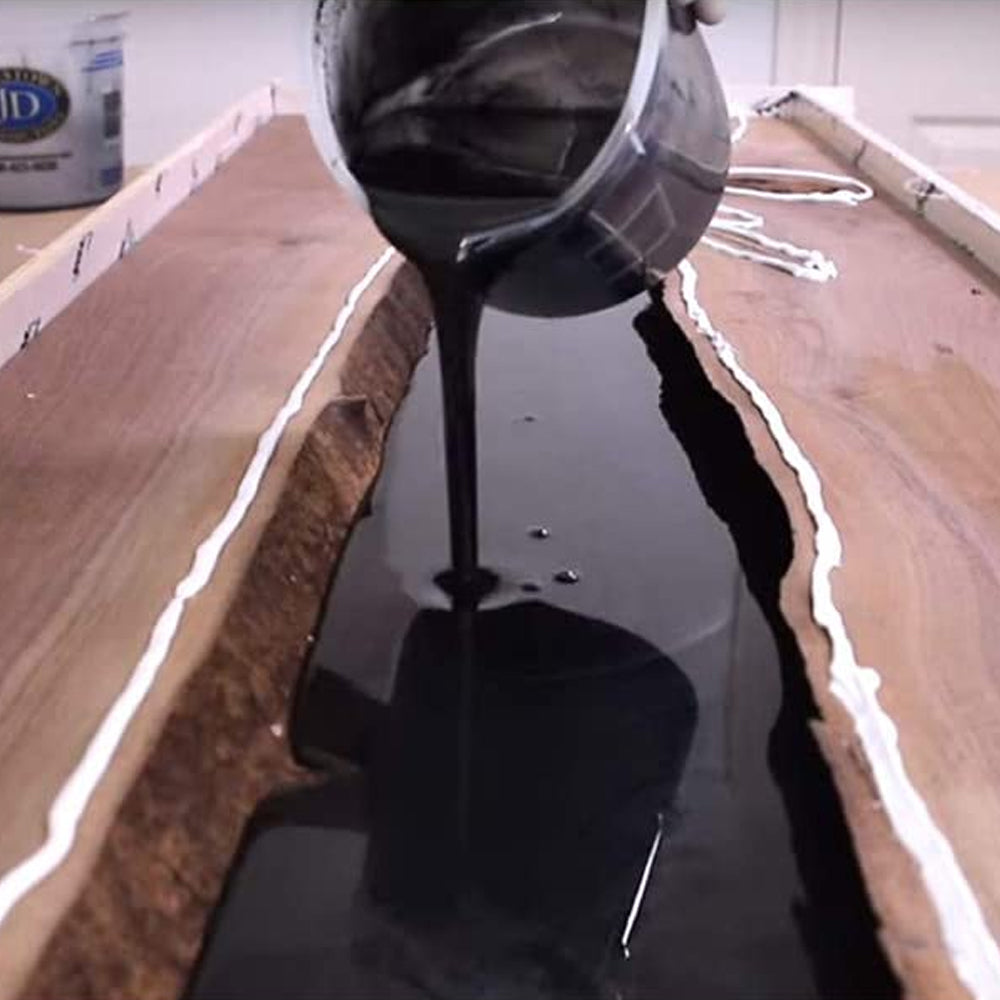
Above: Pouring colored epoxy in to a mold with a pre-sealed wood slab.
Step 4: Remove Bubbles and Wait to Cure
After you have finished pouring your epoxy, let it sit for about 10 minutes to allow bubbles to rise to the surface.
Pop the Bubbles: Use a propane torch or heat gun. Hold it 6–8 inches above the surface and keep it moving in a sweeping motion. The heat briefly lowers surface tension, allowing bubbles to pop without overheating the epoxy.
The Waiting Game: Allow the project to cure in a clean, dust-free environment. Cure time varies by epoxy formula, pour thickness, temperature, and humidity, so always refer to the product’s instructions for guidance. Many epoxies will become tack-free within several hours, but full cure takes longer.
- Initial cure (tack-free): The epoxy has firmed up enough that the surface is no longer sticky, but it is still relatively soft and vulnerable to damage.
- Demolding or light handling: Some epoxy formulas can be safely removed from molds or lightly handled after 24–72 hours. At this stage, the epoxy has enough strength to hold its shape, but it has not reached maximum hardness or chemical resistance.
- Full cure: A full cure occurs when the epoxy has completed its chemical reaction and reached its final strength, hardness, and durability. Depending on the formula, this can take anywhere from 3 to 10 days. Heavy use, sanding, polishing, or exposure to stress should wait until full cure is achieved.
Tips for Successful Epoxy Resin Mixing and Pouring
Mixing and pouring epoxy resin doesn’t have to be complicated, but it does require attention to detail. By following product-specific instructions, taking your time during mixing, and understanding how different formulas behave, you’ll set yourself up for a smoother pour and more reliable results on any epoxy project.

Do It Yourself But Not on Your Own

Comments
Can I pour a 1/4 inch base layer to embed figures in. Using totalboat fathom resin. Realizing it will take longer to cure and then doing the next pour with totalboat fathom.
I do repairs on boats. What is the best way to apply new epoxy over a previous epoxy layer several years old? You diden’t mention how white epoxy will turn beige if not protected with Gellcote.
my first pour just ordered all my stuff from you guys. cant wait to pour
Very helpful. Easy to read.
One should never use the thin wood tongue depressors that you are selling as stirring sticks. The rounded end prevents you from getting into the bottom corner of the mixing pot leading to a poorly mixed batch.
Perhaps you could suggest your customers cut one end square before before using?
I like to have it in PDF and print for myself
Thank you for these excellent tips & instructions.
Thank you for these excellent tips & instructions.