














Table Top vs Deep Pour Epoxy: Which One Should You Use?
When it comes to working with epoxy resin, not all formulas are created equal. Two of the most popular options for makers, woodworkers, and DIYers are table top epoxy and deep pour epoxy. While they’re both traditional two-part epoxy resin systems, each formula is designed to serve very different purposes. Choosing the right one will determine whether you get great results or a headache.
What is Table Top Epoxy?
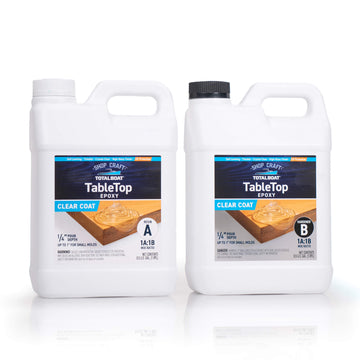
Table top epoxy is a self-leveling coating epoxy formula commonly used on furniture, bar tops, counters, and shelves.
Things to Keep in Mind:
- Many table top formulas on the market today provide extra UV protection. This is good for projects that get some sunlight exposure or will be placed outdoors.
- Even though table top epoxy can be UV stable, it is not recommended for outdoor use without a UV stable varnish or polyurethane finish applied over for maximum resistance. Without this additional protection, long exposure to UV light can cause fading, discoloration, and damage to the surface.
- Table top epoxy is not intended for and should not be used on projects that require deeper pours.
- Table top epoxies do not penetrate wood surfaces deeply when used as a seal coat. If you have unstable or very porous wood, consider using a penetrating epoxy first.
Key Features:
- Ideal for thin coatings, sealing wood and porous surfaces, and lood coats.
- Use for a clear, high-gloss sheen or tint with mica powders, alcohol inks, and pigment dispersions.
- Quick to recoat (3 - 6 hours) and cures within 24-72 hours.
- Maximum pour depth: typically ⅛” – ¼” per layer
- Once cured, the glass-like finish resists damage from scratches, water, and heat.
Best Uses:
- Countertops, bar tops, and tabletops: Great for creating a smooth, high-gloss, self-leveling finish that enhances wood grain and protects surfaces from everyday wear, making it ideal for kitchen counters, bar tops, dining tables, and furniture pieces that need a durable, polished coat.
- Artwork and resin crafts: Perfect for mixed-media pieces, or for small-scale resin crafts like coasters, trays, inlays, and decorative panels where clarity, color depth, and a glass-like surface really shine.
- Wood sealing and protection: Perfect for sealing live-edge slabs and completed woodworking projects, it offers a protective shield against moisture while enhancing natural designs and adding vibrancy to the wood finish.

What is Deep Pour Epoxy?
As the name implies, deep pour epoxy is formulated to handle thicker pours. Unlike table top epoxy, it cures slowly, which allows for large volumes of resin to harden without generating excess heat or cracking.
Things to Keep in Mind:
- Deep pour formulas cannot be poured too shallowly, as this can lead to softer layers, imperfections in the finish, or much longer cure times. Always follow the manufacturer’s recommended minimum and maximum pour depths.
- Environment matters more with deep pours. Because these resins cure slowly, they’re more sensitive to temperature swings, humidity, and airflow. A stable workspace helps reduce issues like trapped moisture, surface clouding, or unexpected cure delays.
- Plan for longer curing times, and adjust your project timeline accordingly. Deep pour systems take time to reach full hardness. Rushing post-processing steps like sanding or demolding can affect clarity and surface quality.
- Thick pours generate more internal heat. Deep pour epoxies can handle heat better than tabletop formulas. However, too much heat at once can still cause overheating. When in doubt, pour in stages.
- Always properly prep your project materials. Silicone molds should be clean and leak-free. Pouring into unsealed porous surfaces or high-moisture wood can cause bubbles, cloudiness, and improper curing.
Key Features:
- Designed for pours up to 3” deep in a single layer (varies by brand)
- Longer working time (up to 4-6 hours)
- Thinner viscosity for easy flow and less bubbles
- Slower cure time (several days to a week)
Best Uses:
- River tables and live-edge wood projects: Ideal for filling wide channels, stabilizing voids, and creating deep, glass-clear pours in large slab builds like river tables and waterfall edges.
- Casting, embedding, and mold work: Great for thick castings such as resin turning blocks, sculptures, and for preserving flowers in resin, memorabilia, or decorative elements that need a slow, controlled cure.

Above: Clock made with TotalBoat Fathom Deep Pour Epoxy by Jenni Chapman
Table Top vs Deep Pour Epoxy:
Key Differences

Can You Use Table Top Epoxy for Deep Pours?
A common question DIYers ask is if you can use a table top epoxy for deep pours. The short answer is no, and here’s why:
Heat buildup (exotherm): Table top epoxy cures too quickly for thick applications. If poured too deep, it will overheat, crack, or even smoke. This is called an exothermic reaction and something you want to avoid.
Clarity issues: Thick pours with the wrong epoxy often result in bubbles and cloudiness.
Wasted Materials: Using a table top for deep pours can ruin expensive live edge slabs or molds, and ultimately, your project.

Above: Using a torch to pop bubbles on a surface coated with a table top epoxy
Can You Use Deep Pour Epoxy as a
Table Top Finish?
Technically, yes—but it’s not ideal.
Deep pour epoxy cures too slowly for thin coats, and if poured too thin, may not cure at all. It also doesn’t produce the same rock-hard, scratch-resistant finish as a table top epoxy.
The best workflow is often to combine both:
- Use a deep pour epoxy for the main casting (like a river table).
- Finish with a layer of table top epoxy for a durable, high-gloss surface.

Above: Coffee Bean Table legs made with Fathom Deep Pour Epoxy and coated with TableTop Epoxy by Barousse Works
Which Epoxy Should You Choose?
The right epoxy depends entirely on your project:
- Choose table top epoxy if you’re working on bar tops, countertops, or any project requiring a thin, glossy, protective finish.
- Choose deep pour epoxy if you’re working on thick castings, river tables, or projects with pours greater than ¼”.
- Use both for complex projects that need both depth and durability.
Above: Watch 'How to Use TableTop Epoxy: FAST AND FLAWLESS!'
Whether you’re coating or casting, understanding the differences between epoxy formulas will help you choose the right epoxy resin for the job. Each formula has its strengths, and when used correctly, both can deliver a clear, durable, professional finish.
Choose the Best Epoxy for Your Next Project
If you’re still not sure which epoxy is right for your project, check out our full epoxy resin buying guide.
Additional Helpful Articles
What's the maximum pour thickness for TotalBoat Epoxy products and other TotalBoat resin products?
TotalBoat Resin Mix Ratios, Application Temperatures, Pot Life, Working Times and Cure Times
How to seal wood with TotalBoat Penetrating Epoxy to prevent moisture damage
Table top epoxy problems and how to correct them
Easy Tips for Beautiful Resin Molding and Casting
How to Epoxy a Table Top
Comments
I’m interested in finding out if you can do epoxy on a counter top that has an old style (70’s) Formica type top . Does the top need to be removed prior to using epoxy. Also what type of epoxy do I need to use for cutting boards or turning bowls. I’ve never used epoxy before and on a limited budget.