




















How to Use Fillers and Thicken Epoxy
A guide on epoxy fillers and how to use for fillets, gap filling, and fairing
Thickening epoxy is all about controlling the flow, shape, and strength of the mixture. While epoxy itself has excellent properties for woodworking and marine projects, mixing with fillers and additives can turn clear, thin resin into the right tool for the job. By choosing the right epoxy fillers and mixing to the proper consistency, you can create anything from a lightly thickened blend for laminating to a non-sag paste that stays put on vertical surfaces.
This guide focuses on marine grade epoxy and the most useful fillers for boat and shop projects:
- Silica Thickener (non-sag, strong fillets and bonding)
- Milled Glass Fiber (reinforces bonds and gap filling)
- Microballoons (fairing and easier sanding)
- Wood Flour (simple, wood-toned filler option)

Choose the Right Filler for Your Project
Adding fillers changes epoxy’s thickness and workability, making it suitable for different repair tasks. The best filler depends on whether you need no-sag control, strength, sandability, or a smooth appearance.
Silica Thickener: Best for No Sags and Drips
Silica is an extremely fine fumed powder that creates a smooth, non-sagging, high-strength mixture. Use silica when you need epoxy to hold its shape and stay put without dripping, especially for fillets, bonding, and vertical/overhead work. This versatile filler is commonly mixed with other additives to create custom fairing, laminating, and putty compounds.
Use for: preventing runoff, fillets that won’t slump, structural bonding, and general-purpose thickening.
Pro Tip: Silica thickener is the hardest to sand among common thickening agents. Blend with microballoons for easier sanding if needed for your repair.
Milled Glass Fiber: Best for Strength and Structure
Milled glass fiber is finely ground fiberglass fiber used to improve tensile strength,flexibility, and impact resistance while reducing shrinkage. An excellent option to repair impact damage in fiberglass, strengthen laminates, and enhance wood’s natural stiffness and flex when bonding.
Best for: structural bonding and gap filling, stronger fillets, bedding hardware and electronics, and reinforcing joints.
Pro Tip: Milled glass fiber alone will not thicken epoxy enough, so combine it with silica to reach a workable, no-sag consistency.
Microballoons: Best for Fairing and Sanding
Microballoons are low-density hollow spheres that help create a sandable fairing compound. Usually made with glass, you can also use phenolic or acrylic options for your repairs. They’re lightweight, easiest to sand, and best for fairing and non-structural projects. Since they’re so light, microballons are great for bulking up epoxy for greater volume without adding weight.
Best for: Fairing and cosmetic smoothing, shaping cured epoxy with less sanding effort, and improving sandability when blended into other filler mixes.
Wood Flour: For Wood Tone and Small Fills
Wood flour can bulk up epoxy and provide a wood-toned look for small repairs or fillets on wood.
Best for: small gap filling on wood, fillets where color match matters more than perfect smoothness, and quick shop fixes when you don’t have a dedicated filler.
Pro tip: For a more accessible option, you can use sawdust in place of wood flour. Just make sure raw sawdust is sieved and ground to achieve the right consistency and minimize resin absorption risks. Sawdust should be fine, dry, and clean (avoid oily/dirty dust and big chips).

Working Safely with Fillers
Epoxy fillers and thickeners contain fine particles and chemical compounds that can cause serious harm with repeated or unprotected exposure. Before mixing or applying anything, make sure you have the right PPE in place:
- Gloves: Always wear nitrile gloves (not latex). Direct skin contact with epoxy can cause sensitization over time, leading to allergic reactions that worsen with each exposure.
- Eye protection: Wear safety glasses or chemical splash goggles to guard against resin splashes and airborne filler dust.
- Respiratory protection: At minimum, use an N95 respirator. When working with silica thickener specifically, upgrade to a half-face respirator with P100 particulate filters — silica dust is extremely fine and poses a serious inhalation risk with repeated exposure.
- Clothing: Wear long sleeves and closed-toe shoes to minimize skin contact during mixing and application.
- Ventilation: Always work in a well-ventilated space. Open doors and windows, or use a fan to move air away from your workspace.

How to Thicken Epoxy
This process stays the same no matter which filler you choose.
Step 1: Prep your surfaces first
- Remove dust, oil, and contamination
- Dry fit parts and plan clamping
- Sand/scuff the bonding surfaces as needed
Step 2: Mix epoxy resin and hardener thoroughly
Before adding any epoxy resin fillers, fully mix the resin and hardener until uniform. Thickening too early can hide unmixed epoxy and cause improper curing.
Step 3: Add fillers slowly
Sprinkle in your chosen thickener after mixing the epoxy components. Add in small increments until you hit the consistency you need.

Step 4: Mix again until uniform
Scrape the sides and bottom of your mixing cup and keep folding the filler in until the texture is consistent. As soon as the formula is thickened enough, pour onto a flat tray or apply immediately to prevent exotherming.
Pro Tip: Adding fillers will shorten the work time of the epoxy, so be sure to plan ahead of time to avoid overheating.

Step 5: Application
How you apply thickened epoxy depends on the job. Each application type calls for a specific technique and the right tools to get a clean, effective result.
Fillets: Load your thickened epoxy (mayo to peanut butter consistency) into a plastic bag or piping bag and cut a small corner off, or apply with a wooden tongue depressor or mixing stick directly into the joint. Once the bead is laid in, tool it to a smooth, concave radius using a filleting tool, a rounded stick, or the back of a plastic spoon. Wet your tool slightly with denatured alcohol to prevent sticking. The goal is a consistent radius with no voids — take your time on this step, as a smooth fillet makes the glasswork that follows much easier.
Structural Bonding: For bonding two surfaces together, use a notched spreader or stiff plastic spreader to apply an even layer of thickened epoxy to both mating surfaces where possible. Spread to a consistent thickness, then clamp or fasten immediately. Squeeze-out around the joint is a good sign, it means you have full coverage. Clean up excess with a mixing stick before it cures.
Gap Filling: Pack thickened epoxy (peanut butter) directly into the void using a mixing stick or gloved finger, slightly overfilling the gap. Once cured, sand or grind flush. For deep voids, fill in stages to avoid excessive heat buildup from thick pours.
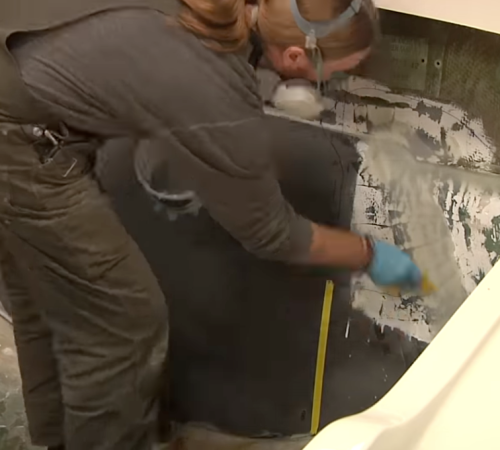
Fairing: Apply fairing mixture using a wide flexible fairing board, a squeegee, or a wide plastic spreader. Work in long, even strokes to feather out the compound. Apply in thin layers as thick fairing coats can sag and are harder to sand. Allow each coat to fully cure before blocking and sanding with a long board to identify and fill low spots. Repeat until the surface is fair.
Laminating / Wetting Out Fabric: For laminating fiberglass cloth, use a foam roller (3-inch or 4-inch) to apply a thin, even coat of lightly thickened or unthickened epoxy over the surface first, then lay the cloth and roll again to wet it through. Use a fiberglass laminating roller (a ribbed metal roller) to consolidate the cloth, remove air bubbles, and push out excess resin. Follow with a squeegee to remove any pooled epoxy — you want the cloth saturated but not resin-rich.
Priming Porous Surfaces: For porous wood or end grain, apply a thin unthickened epoxy coat first using a foam brush or foam roller to seal the surface before applying any thickened mixture. This prevents the substrate from absorbing resin out of your thickened mix, which can starve the bond.
Consistency Guide: How to Match Thickness to the Job
A simple way to dial in thickened epoxy is to aim for recognizable textures. Below are some common thicknesses for different types of repairs.
- Ketchup: Slightly runny, like thick syrup - This is slightly thickened epoxy for light bonding where some flow is okay. Best for priming porous surfaces, wetting out fiberglass and composite fabrics, and injecting with an epoxy syringe.
- Mayonnaise: Moderately thick and spreadable - best for general bonding, fillets, fairing, skim coats, and filling shallow low spots.
- Peanut butter: Thicker and holds shape - best for maximum no-sag on large fillets, structural bonding, filling deep voids, applying on vertical or overhead surfaces and fairing.
A Note on Ratios:
You may be wondering ‘how much filler do I need to use?’ This is where things can get tricky, it’s like asking Picasso how much yellow paint it takes to make a painting. It’s difficult to quantify how much it takes to hit a certain consistency, and it really comes down to experimentation.
Ambient temperature and humidity play a big role in consistency, therefore it will be different for everyone, every time. The most important thing is to always start with a small amount and build up your mixture slowly.
The more you work with fillers you’ll get a sense of feel and visual to achieve a certain consistency. Andy Miller of Boatworks today has a great video that dives into this a little more, check it out below.
Best Filler Mixes for Fillets
Fillets are a smooth, rounded bead of thickened epoxy applied to where two surfaces meet at an angle. The fillet increases the surface area for fiberglassing, reducing the angle for the fiberglass which has a hard time doing sharp corners. For most fillets, you want to aim for smooth handling with no-sag and added strength.
- Base: mixed two-part epoxy
- Thicken with silica thickener to a mayonnaise
- For higher-strength fillets, add a portion of milled glass fiber, then adjust final texture with silica

Best Filler Mixes for Gap Filling
For gap filling, you want thicker consistency so it won’t run out of voids.
- Base: mixed two-part epoxy
- Add milled glass fiber for reinforcement
- Add silica thickener to reach peanut-butter consistency
Cosmetic Gap Fills that Need Sanding
- Base: mixed two-part epoxy
- Add a blend of silica thickener (to prevent sag) and microballoons (for easier sanding)
- Aim for mayonnaise texture that still spreads smoothly
Wood-Toned Gap Fill and Small Repairs
- Base: mixed two-part epoxy
- Add microballoons until you get a spreadable paste
- Apply in thin layers and sand between coats as needed
Troubleshooting
It’s still runny. Add more thickener (silica is the fastest route to no-sag). Warm temperatures can make epoxy flow more.
It’s too thick and crumbly. You likely added too much filler too fast. Mix in a small amount of unfilled epoxy a little at a time (before applying).
It has clumps or dry pockets. Add filler gradually, scrape the sides and bottom of the cup, and mix until uniform.
It kicked too fast in the cup. Mix smaller batches and spread the epoxy into a wider, shallow container to reduce heat buildup.