FIBERGLASS RESIN CALCULATOR

KNOW WHAT YOU'LL NEED

Not sure how much epoxy resin or polyester resin you need to wet out and laminate fiberglass or other composite projects? The math may seem complicated, but we've created this handy calculator to take the guesswork out. Just select the type of fiberglass, add the square footage of your lamination, and you'll get a recommended estimate for your project needs.

Note: This calculator is ideal for estimating the amount of epoxy or polyester resin needed for fiberglass lamination. Use this epoxy resin calculator for estimated coverage when coating table tops or casting molds.

HOW TO CALCULATE FIBERGLASS COVERAGE

Start with measuring your fiberglass sheet by Length x Width. Multiply by total number of layers to determine your total laminate area. Enter that dimension into the fiberglass calculator, along with the fabric weight and type you're using.

From there, the tool uses standard resin-to-fiber ratios based on fabric type to estimate total resin needed in ounces and quarts/gallons. We recommend adding 10-15% extra to account for waste, overlaps, and irregular shapes. Porous surfaces like bare wood may require additional resin. 

CONVERSIONS AND CONSIDERATIONS

  • Basic Coverage: (Length × Width) x Number of Layers = approximate laminate sq ft
  • Typical Resin to Chopped Strand Mat Ratio: ~2:1 to 3:1
  • Typical Resin to Plain Weave Fabric Ratio: ~1:1 to 1.4:1
  • Typical Resin to Biaxial Fabric Ratio: ~1.2:1 to 1.8:1
  • Typical Resin to Woven Roving Fabric Ratio: ~1.5:1 to 2.5:1
  • Estimates are based on a typical hand layup method. Actual resin usage can vary depending on technique, temperature, and how heavily the fabric is saturated.

How much resin do I need?

Please select the type of fiberglass, then enter the total square feet or square yards of fiberglass you will be laminating before selecting Calculate.

To calculate square feet or square yards: Multiply Length x Width.
Square Feet

Numbers only; up to 1 decimal.

Enter values to estimate total quantity needed.

Still need help? Contact Us Below!

TotalBoat Support
Business hours: 8AM - 5PM EST Monday - Friday
Live chat: Select the Chat bubble on TotalBoat.com
Knowledge Database
Please visit: TotalBoat Support for more great information on our products.
This includes: Troubleshooting guides, Coverage calculators, and Articles to answer our most frequently asked questions.

TIPS FOR WORKING WITH FIBERGLASS AND RESIN

Plan for temperature and working time. Warmer conditions speed up curing, while cooler temperatures slow things down. Adjust your batch sizes accordingly. If working with epoxy, use either fast or slow hardener for the best working times at different temps. 

Understand your fabric type. 
To determine how much fiberglass resin you need, start with your base fabric. Different fiberglass fabrics absorb at different rates:  Lightweight woven cloth wets out quickly and uses less resin, while heavier stitched fabrics, woven roving, and chopped strand mat require significantly more to fully saturate. 

As a general rule, woven cloth has about a 1:1 ratio with resin, while heavier and more open fabrics require more resin to properly saturated the fibers. The calculator uses each fabric type's typical resin-to-fabric ratio to estimate, but actual usage can vary depending on your technique, surface, and working conditions.

Add extra for overlaps and lamination surface. We recommend adding 10–15% more resin to account for waste, overlaps, and irregular shapes, especially on large projects like boat repairs or building watercraft.  Fiberglassing over a porous surface like bare wood or foam will also impact how much resin you need, as these materials tend to absorb more.

Application method affects resin usage. Most fiberglass projects use hand layup, where resin is applied with a brush or roller. This method typically uses more resin because excess material can remain in the laminate. Vacuum bagging removes excess resin and air, creating a tighter, stronger laminate with less resin used overall.

The calculator assumes a standard hand layup method. If you’re vacuum bagging, your actual resin usage may be lower.

Apply resin evenly and work in sections. Fully wet out the fabric without over-saturating. Excess resin doesn’t add strength and can lead to heavier, less efficient laminates. Breaking your project into smaller areas helps maintain control and reduces waste during application.

TotalBoat 5:1 Traditional Epoxy Resin being poured on  fiberglass

COMMON QUESTIONS ASKED

IS THE CALCULATOR 100% RIGHT?

This calculator provides a reliable estimation based on standard coverage rates and typical resin-to-fabric ratios. Actual usage may vary depending on surface condition, application method, and how many laminate layers you apply, so it’s a good idea to allow for a little extra material.

HOW DO I KNOW WHICH FIBERGLASS FABRIC TO USE?

The right fabric depends on what you’re trying to do—whether it’s a smooth finish, general repair, or structural strength. Each fabric type in the calculator is designed for a specific purpose:

Chopped Strand Mat (CSM): Best for building thickness and conforming to curves. CSM wets out easily and is commonly used in repairs and layering, especially with polyester resin. It uses more resin than woven fabrics.

Lightweight Cloth (up to 4 oz): Ideal for surface work, sheathing wood, and finishing. These fabrics lay down smoothly, turn transparent when wet out, and require less resin. Tape is great for seams, edges, and reinforcing joints.

Medium Cloth (4-10 oz): A good all-around option for reinforcement and repairs. It offers a balance of strength and conformability while still finishing relatively smooth.

Biaxial Cloth (12-18 oz, 1708): Designed for strength. Biaxial fabrics use stitched fibers instead of a tight weave, allowing them to handle higher loads. 1708 includes a mat backing, making it a strong choice for structural repairs and rebuilds—but it requires more resin.

Woven Roving (18 oz, 24 oz): Heavy, open-weave fabric used for building strength and thickness in larger laminations. It’s strong but doesn’t conform as easily and uses significantly more resin. Often paired with mat in layered builds.

Dynel Fabric: A common fiberglass alternative, this fabric is used when durability and abrasion resistance matter most. Dynel is great for high-wear areas and creates a tough, textured surface, but it absorbs more resin than fiberglass cloth.

DOES IT MATTER IF I USE EPOXY OR POLYESTER RESIN?

Both epoxy resins and polyester resins can be used with fiberglass, but they behave a bit differently. Epoxy typically wets out fabric more efficiently and bonds well to a wider range of surfaces. Polyester is commonly used in fiberglass builds and repairs. The calculator works for both, but actual usage may vary slightly depending on the system you choose.

Some fiberglass materials, like chopped strand mat (CSM), are designed to work with polyester or vinyl ester resins. Standard mat contains a binder that helps it hold together, and that binder does not break down properly with epoxy. 

Once you've determine what resin type and reinforcement fabric to work with, build your own resin and fiberglass kit with our interactive bundle tool.

WHY DOES FABRIC TYPE CHANGE HOW MUCH RESIN I NEED?

Different fabrics absorb resin differently. Lightweight woven cloth has a tight weave and uses less resin, while heavier or more open fabrics like woven roving and chopped strand mat have more space between fibers and require more resin to fully saturate. That’s why the calculator adjusts based on fabric type.

WHY SHOULD I ADD EXTRA RESIN?

A little extra goes a long way. Resin gets lost during mixing, application, and overlap areas. Irregular shapes and edges also increase usage. Running out mid-layup can lead to poor bonding between layers, so adding 10–15% helps keep your project on track.

WHAT HAPPENS IF I USE TOO MUCH OR TOO LITTLE RESIN?

Too little resin can leave dry spots, which weakens the laminate. Too much resin doesn’t add strength—it just adds weight and can lead to a less efficient layup. The goal is to fully wet out the fabric without leaving excess resin on the surface.

DOES SURFACE TYPE AFFECT HOW MUCH RESIN I NEED?

Yes. Porous surfaces like bare wood or foam can absorb resin before the fabric is fully saturated, which increases total usage. Sealed or previously coated surfaces typically require less resin.

DOES APPLICATION METHOD CHANGE HOW MUCH RESIN I NEED?

Yes—it can make a big difference in how much resin your project actually uses.

Hand layup (brush or roller): This is the most common method and typically uses more resin. When applying by hand, it’s easy to leave excess resin in the laminate or on the surface. Some resin is also lost in rollers, brushes, and mixing containers. Because you’re relying on manual pressure to wet out the fabric, laminates tend to be slightly more resin-rich.

Vacuum bagging (more controlled): Vacuum bagging applies even pressure across the laminate and actively removes excess resin and trapped air. This results in a tighter, more efficient laminate with a higher resin-to-fabric ratio. Since less excess remains in the finished part, total resin usage is typically lower.

HOW MANY LAYERS OF FIBERGLASS DO I NEED?

The number of layers depends on your project, the level of strength required, and the type of fabric you’re using. There’s no one-size-fits-all answer, but there are a few reliable ways to determine what you need. If you’re repairing or rebuilding something like a boat hull, transom, or deck, the best starting point is matching the original construction. Use the same number of layers, and similar fabric types, whenever possible. Taper and feather the surrounding area and rebuild to the original thickness to maintain strength and a smooth transition between old and new material.

Every project is different. If you’re unsure, reach out to the TotalBoat Total Support Team. They can help you choose the right fabric, resin, and application method to get the job done.

RELATED PRODUCTS

TotalBoat Clear High Performance Epoxy Kit Size A Medium
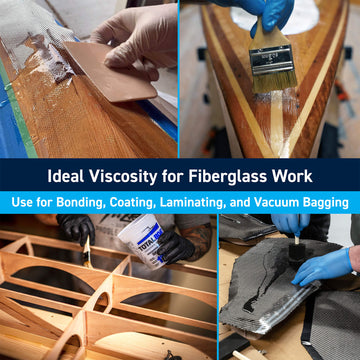
TotalBoat High Performance Epoxy: Ideal Viscosity for Fiberglass Work
TotalBoat High Performance Epoxy: Marine Grade Formula, Endless Applications
TotalBoat High Performance Epoxy: Non-Blush Formula
TotalBoat High Performance Epoxy: Create Resin Art & Special Effects
Clear High Performance Epoxy Kits
TotalBoat High Performance Epoxy: Choose the Right Hardener for Your Project
TotalBoat High Performance Epoxy: Easy to Mix, Pour, and Spread
Combine with Fillers for Fairing, Filleting, and Gap Filling
TotalBoat Clear High Performance Epoxy Kit Size A Fast
TotalBoat Clear High Performance Epoxy Kit Size A Slow
TotalBoat Clear High Performance Epoxy Kit Size B Fast
TotalBoat Clear High Performance Epoxy Kit Size B Medium
TotalBoat Clear High Performance Epoxy Kit Size B Slow
TotalBoat Clear High Performance Epoxy Kit Size C Fast
TotalBoat Clear High Performance Epoxy Kit Size  C Medium
TotalBoat Clear High Performance Epoxy Kit Size C Slow
TotalBoat Clear High Performance Epoxy Kit Size M Slow
TotalBoat Clear High Performance Epoxy Kit Size A Medium
TotalBoat High Performance Epoxy: Ideal Viscosity for Fiberglass Work
Clear High Performance Epoxy Kits
TotalBoat High Performance Epoxy: Marine Grade Formula, Endless Applications
TotalBoat High Performance Epoxy: Non-Blush Formula
TotalBoat High Performance Epoxy: Create Resin Art & Special Effects
Clear High Performance Epoxy Kits
TotalBoat High Performance Epoxy: Choose the Right Hardener for Your Project
TotalBoat High Performance Epoxy: Easy to Mix, Pour, and Spread
Combine with Fillers for Fairing, Filleting, and Gap Filling
TotalBoat Clear High Performance Epoxy Kit Size A Fast
TotalBoat Clear High Performance Epoxy Kit Size A Slow
TotalBoat Clear High Performance Epoxy Kit Size B Fast
TotalBoat Clear High Performance Epoxy Kit Size B Medium
TotalBoat Clear High Performance Epoxy Kit Size B Slow
TotalBoat Clear High Performance Epoxy Kit Size C Fast
TotalBoat Clear High Performance Epoxy Kit Size  C Medium
TotalBoat Clear High Performance Epoxy Kit Size C Slow
TotalBoat Clear High Performance Epoxy Kit Size M Slow

Clear High Performance Epoxy Kits

1708 Biaxial Fiberglass Cloth

1708 Biaxial Fiberglass Cloth

TotalBoat Polyester Laminating Resin 1 Gallon
TotalBoat Polyester Laminating Resin: Marine-Grade Resin for Laminating & Repairs
TotalBoat Polyester Laminating Resin: Trusted by DIY Boaters & Marine Pros
TotalBoat Polyester Laminating Resin: Easily Saturates and Wets Out Fiberglass
TotalBoat Polyester Laminating Resin: Includes 2 oz. MEKP Catalyst for Proper curing with Surface Tack
TotalBoat Polyester Laminating Resin: Easy Application for Professional Results
TotalBoat Polyester Laminating Resin: Choose the Right Polyester Resin for Your Project
TotalBoat Polyester Laminating Resin: Combine with Fillers for Fairing, Filleting, and Gap Filling
TotalBoat Polyester Laminating Resin Quart
Polyester Laminating Resin
TotalBoat Polyester Laminating Resin 1 Gallon
TotalBoat Polyester Laminating Resin: Marine-Grade Resin for Laminating & Repairs
Polyester Laminating Resin
TotalBoat Polyester Laminating Resin: Trusted by DIY Boaters & Marine Pros
TotalBoat Polyester Laminating Resin: Easily Saturates and Wets Out Fiberglass
TotalBoat Polyester Laminating Resin: Includes 2 oz. MEKP Catalyst for Proper curing with Surface Tack
TotalBoat Polyester Laminating Resin: Easy Application for Professional Results
TotalBoat Polyester Laminating Resin: Choose the Right Polyester Resin for Your Project
TotalBoat Polyester Laminating Resin: Combine with Fillers for Fairing, Filleting, and Gap Filling
TotalBoat Polyester Laminating Resin Quart
Polyester Laminating Resin

Polyester Laminating Resin

Fiberglass Mat
Fiberglass Veil Mat
Fiberglass Mat
Fiberglass Veil Mat

Fiberglass Mat

5:1 Traditional Epoxy Resin Gallon Kit with Fast Hardener
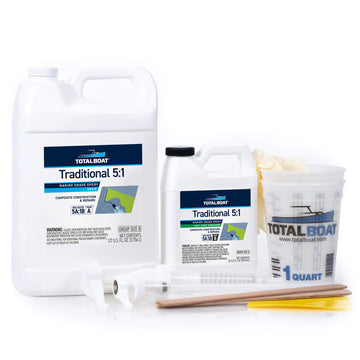
TotalBoat Traditional 5:1 Marine Epoxy Resin: High Structural Strength
TotalBoat Traditional 5:1 Marine Epoxy Resin: Ideal Viscosity for Coating, Laminating and Bonding
TotalBoat Traditional 5:1 Marine Epoxy Resin: For Composite Construction and Repairs
TotalBoat Traditional 5:1 Marine Epoxy Resin: Combine with Fillers for Fairing, Filleting, and Gap Filling
TotalBoat Traditional 5:1 Marine Epoxy Resin: Ideal for Wetting Out Fiberglass
TotalBoat Traditional 5:1 Marine Epoxy Resin: Includes Calibrated Pumps for 5:1 Mix Ratio
TotalBoat Traditional 5:1 Marine Epoxy Resin: Being brushed on fiberglass inner rail
TotalBoat Traditional 5:1 Marine Epoxy Resin: Being brushed on prepped hull
TotalBoat Traditional 5:1 Marine Epoxy Resin: Brushing over boat patch
TotalBoat Traditional 5:1 Marine Epoxy Resin: Being worked into fiberglass
TotalBoat Traditional 5:1 Marine Epoxy Resin: Fiberglass closeup
TotalBoat Traditional 5:1 Epoxy Resin Kit Resin with pumps, mixed epoxy being brushed on a board
5:1 Traditional Epoxy Resin Quart Kit with Fast Hardener
Traditional 5:1 Marine Epoxy Resin Kits
5:1 Traditional Epoxy Resin Gallon Kit with Slow Hardener
TotalBoat 5:1 Traditional Epoxy Resin 4.5 Gallon Kit with Fast Hardener
TotalBoat 5:1 Traditional Epoxy Resin 4.5 Gallon Kit with Slow Hardener
5:1 Traditional Epoxy Resin Gallon Kit with Fast Hardener
TotalBoat Traditional 5:1 Marine Epoxy Resin: High Structural Strength
Traditional 5:1 Marine Epoxy Resin Kits
TotalBoat Traditional 5:1 Marine Epoxy Resin: Ideal Viscosity for Coating, Laminating and Bonding
TotalBoat Traditional 5:1 Marine Epoxy Resin: For Composite Construction and Repairs
TotalBoat Traditional 5:1 Marine Epoxy Resin: Combine with Fillers for Fairing, Filleting, and Gap Filling
TotalBoat Traditional 5:1 Marine Epoxy Resin: Ideal for Wetting Out Fiberglass
TotalBoat Traditional 5:1 Marine Epoxy Resin: Includes Calibrated Pumps for 5:1 Mix Ratio
TotalBoat Traditional 5:1 Marine Epoxy Resin: Being brushed on fiberglass inner rail
TotalBoat Traditional 5:1 Marine Epoxy Resin: Being brushed on prepped hull
TotalBoat Traditional 5:1 Marine Epoxy Resin: Brushing over boat patch
TotalBoat Traditional 5:1 Marine Epoxy Resin: Being worked into fiberglass
TotalBoat Traditional 5:1 Marine Epoxy Resin: Fiberglass closeup
TotalBoat Traditional 5:1 Epoxy Resin Kit Resin with pumps, mixed epoxy being brushed on a board
5:1 Traditional Epoxy Resin Quart Kit with Fast Hardener
Traditional 5:1 Marine Epoxy Resin Kits
5:1 Traditional Epoxy Resin Gallon Kit with Slow Hardener
TotalBoat 5:1 Traditional Epoxy Resin 4.5 Gallon Kit with Fast Hardener
TotalBoat 5:1 Traditional Epoxy Resin 4.5 Gallon Kit with Slow Hardener

Traditional 5:1 Marine Epoxy Resin Kits

Fiberglass Cloth 10oz

10 Oz. Fiberglass Cloth

TotalBoat Polyester Finishing Resin 1 Gallon
TotalBoat Polyester Finishing Resin: Marine-Grade Polyester Resin for Final Coats & Surface Repairs
TotalBoat Polyester Finishing Resin: Trusted by DIY Boaters & Marine Pros
TotalBoat Polyester Finishing Resin: Easily Saturates and Wets Out Fiberglass
TotalBoat Polyester Finishing Resin: Includes 2 oz. MEKP Catalyst for Proper Curing
TotalBoat Polyester Finishing Resin: Easy Application for Professional Results
TotalBoat Polyester Finishing Resin:  Choose the Right Polyester Resin for Your Project
TotalBoat Polyester Finishing Resin: Combine with Fillers for Fairing, Filleting, and Gap Filling
TotalBoat Polyester Finishing Resin 1 Quart
TotalBoat Polyester Finishing Resin 1 Gallon
TotalBoat Polyester Finishing Resin: Marine-Grade Polyester Resin for Final Coats & Surface Repairs
Polyester Finishing Resin
TotalBoat Polyester Finishing Resin: Trusted by DIY Boaters & Marine Pros
TotalBoat Polyester Finishing Resin: Easily Saturates and Wets Out Fiberglass
TotalBoat Polyester Finishing Resin: Includes 2 oz. MEKP Catalyst for Proper Curing
TotalBoat Polyester Finishing Resin: Easy Application for Professional Results
TotalBoat Polyester Finishing Resin:  Choose the Right Polyester Resin for Your Project
TotalBoat Polyester Finishing Resin: Combine with Fillers for Fairing, Filleting, and Gap Filling
TotalBoat Polyester Finishing Resin 1 Quart

Polyester Finishing Resin

6 Oz. Fiberglass Cloth

6 Oz. Fiberglass Cloth