














How to Make Epoxy Resin Jewelry
A Step-by-Step Guide for Beginners
If you’ve been wondering how to make resin jewelry at home, you’re in the right place. This guide walks you through the process from start to finish, including what supplies you need and all the steps to get you from mixing epoxy to assembling your finished pieces.
Whether you’re interested in making epoxy jewelry as a hobby, side business, or creative outlet, learning the fundamentals will help you get consistent, beautiful results.
In this guide, you’ll learn:
- How to make jewelry with epoxy resin step by step
- Common tools and materials used
- Tips to avoid bubbles, sticky cures, and cloudy finishes
- Simple resin jewelry ideas for beginners
What Is Epoxy Resin Jewelry?
You can easily make your own resin jewelry using epoxy, a two-part system that is mixed together to activate and create. Once mixed, it is then poured into molds or bezels to create pendants, earrings, rings, and charms.
Epoxy is commonly used for jewelry making because it:
- Cures hard and durable
- Dries clear for embedded designs
- Works well with pigments, dyes, and inclusions like glitter and dried flowers
- Is very lightweight when fully cured
- Can be sanded and polished for final touches
This makes it ideal for beginners who want to make beautiful and professional-looking resin jewelry.

Essential Resin Jewelry Supplies
Before you start making resin jewelry, gather all your materials so you can work efficiently once the resin is mixed.
Tools + Supplies Checklist
Resin + Pigment
- 2-Part
epoxy resin * - Epoxy-compatible pigments, mica powder, and/or alcohol inks (for tinting)
- Glitter, foil flakes, dried flowers, tiny charms, or other decorative items

Molds + Mixing
- Silicone jewelry molds
- Mixing cups and stir sticks
- Tape for cleaning dust and debris off of molds
- Protective gear
- Popsicle sticks, toothpicks and/or tweezers for detail work
- Heat tool for bubbles
Pro Tip: Use a small heat gun and avoid using a torch on delicate jewelry molds, which can ruin or melt the mold.

Finishing + Assembly
- Sandpaper (wet/dry: 400, 600, 800, 1000, 1500, 2000 grit)
- Pin vise or micro drill bits (to pierce holes for chain and findings)
- Jump rings, earring hooks, chain, bails, clasps
- Jewelry pliers (round nose + flat nose)

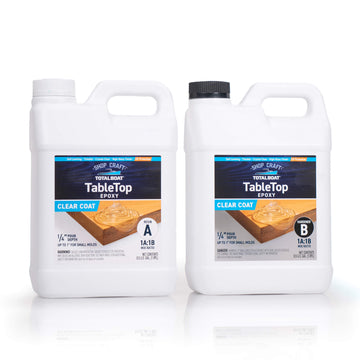
*For epoxy resin jewelry, it is important to use the proper formula. Avoid deep pour or structural epoxy resins. We recommend a table top or artist resin for the best results.
Having everything ready is critical when making resin jewelry, since epoxy has a limited working time once mixed.

Pro Tip: Syringes are another great tool to have on hand because they can help control the flow when it comes time to pour epoxy into the mold.
Preparing Your Workspace for Making Jewelry
A clean, controlled workspace is key when learning how to make resin jewelry successfully.
Workspace Setup and Safety Tips
- Work on a level surface
- Cover your table with plastic or silicone mats
- Ensure good ventilation
- Wear nitrile gloves and avoid skin contact
- Clean molds (you can use tape to remove debris and dust)
- Keep dust, hair, and lint away from curing resin
- Keep resin away from food prep areas and curious pets/kids
Pro Tip: Work in a climate-controlled space. Keep the resin and workspace 65–75°F (ideal ~70°F) with under 60% relative humidity, since cooler temps make it thicker/slower and can trap bubbles or make it harder to pour, and hotter temps make it set too fast (risking heat, yellowing, or distortion).
Proper prep helps prevent imperfections and improper cures when creating resin jewelry. Be sure to work in a space where your molds can be left to cure for up to a day without interruption.
Step 1 – Mixing Resin for Jewelry Making
Proper measuring and mixing is the most important steps in epoxy resin jewelry. Always read the manufacturer’s instructions for cure temps, mix ratios, and working time.
How to Mix Epoxy Resin Correctly
- Measure resin and hardener exactly according to instructions
- Pour both into a clean mixing cup
- Stir slowly for the recommended time
- Scrape the sides and bottom while mixing
Common mistakes include mixing too quickly (which can introduce bubbles that can be tricky to remove from smaller molds) and incorrect ratios that result in soft cures or sticky results. We always recommend the two-cup mixing method.
Step 2 – Adding Color and Decorative Elements
This is where your resin jewelry comes to life! With color and decorative inclusions, you can customize and experiment for endless possibilities. You can personalize your resin jewelry by adding:
- Alcohol ink, pigment dispersion, or mica powders
- Glitter, confetti, metallic flakes
- Dried flowers or botanicals
- Small charms or beads
- Natural elements like crystals or seashells
- Sealed photos and paper
A little pigment goes a long way. Add any dye you use sparingly, especially since jewelry resin molds are small, so the resin still cures properly. Adding too much pigment in epoxy can lead to improper curing.

Pro Tip: if you plan on using multiple colors, make sure to have small mixing cups on hand to seperate pre-mixed epoxy into. Add your different pigments to each cup and stir to evenly distribute.
Step 3 – Pouring Resin Into Jewelry Molds
Careful pouring helps create smooth, bubble-free jewelry:
- Pour slowly to avoid bubbles
- Fill molds gradually - for more precise pouring, use small flexible mixing cups or syringes
- Use a toothpick to guide resin into corners
If bubbles appear, gently pass a heat gun or torch over the surface.
Pro Tip: To help minimize bubbles, use 99% isopropyl alcohol in your mold and/or on top of the epoxy after you pour. Be sure to spritz the alcohol using a spray bottle with a fine mist setting to prevent damaging silicone molds or impacting the cure. We recommend 99% as lower concentrations have too much water and can cause curing issues.
Step 4 – Curing Resin Jewelry
Curing time varies, but patience is critical when making resin jewelry. Rushing the cure can ruin otherwise well-made pieces.
- Leave molds undisturbed once you’ve poured the epoxy resin within
- Use a tupperware or other container to protect from dust while curing
- Follow the manufacturer’s guidelines on how long to let the epoxy cure before demolding

Step 5 – Demolding and Finishing Resin Jewelry
Once cured, remove your pieces carefully. For small jewelry molds, you can gently flex or bend the mold and your piece/s should pop right out. If the piece itself is malleable and/or bending upon the demold, that is a sign that it is not fully cured yet. In most cases, you can lay the piece on a flat surface and it will flatten itself out as it finishes curing.

Finishing Techniques
- Sand rough edges with fine-grit sandpaper (800-2000) or a deburring tool
- Dome the pieces with either epoxy or UV resin
- If holes are needed, drill holes with a pin vise hand tool
- Attach findings using two pliers (needle nose and/or bent nose pliers work best)
Finishing your pieces can be very detailed work, but taking the time to refine turns raw casts into professional-quality resin jewelry. If there are rough edges on your pieces from excess resin in the mold, you can simply sand them off, or use a deburring tool to scrape the edges clean. If the mold has been heavily used and leaves a dull surface after demolding, simply dome the jewelry piece with another layer of epoxy resin, or use a UV resin with a specialized light for a faster cure.
Some molds include a hole for attaching findings, but can get blocked if you overfill with epoxy. If this happens, use a pin vise to help clear the hole. Or use the pin vise to create your own as needed for your project or if the mold did not have a hole in its design.
For stud earrings, no hole is necessary, and you can go straight to gluing the earring post to the back of the finished piece. Use UV resin or CA glue for this step to create a very secure finish for your earring post.
Pro Tip: Use sandpaper to rough up the back of the earring piece before applying your glue of choice for better adhesion.

Resin Jewelry Ideas for Beginners
If you’re new to resin jewelry making, start simple:
- Stud earrings with solid colors
- Clear pendants with dried flowers
- Minimalist glitter charms
- Initial or letter molds
These projects build confidence as you learn how to make resin jewelry consistently. Once you’ve familiarized yourself with the basics, you can then experiment with different pigment types, color layers and patterns, adding texture, and other creative effects to turn your jewelry into art.

Gummy Bear earrings made by Erica Klein of Hot Fluff using TotalBoat Artist Resin
Common Mistakes to Avoid
When learning how to make epoxy jewelry, watch out for:
- Incorrect mixing ratios
- Overmixing or undermixing
- Pouring too thick or overflowing the mold
- Skipping proper curing time
- Mixing too much epoxy (which can lead to an exothermic reation if not used within the recommended working time)
Understanding these basics will improve your results when making your own pieces.


