















8 Ways to Use Epoxy with Large Silicone Molds
April 2026
If you've been eyeing a large silicone mold and wondering what you can actually make with it, or you are a resin artist looking to tackle a new kind of project, you're in the right place!
Large molds open up a whole world of epoxy resin projects that smaller molds just can't touch. We're talking statement pieces for the home, one-of-a-kind gifts, and functional art that is as unique as it is fun to create.
Whether you're pouring for the very first time or you've got a few projects under your belt, there's something here for every skill level and creative itch. Here are eight of our favorite ways to put a large silicone mold to work.

1. Charcuterie and Serving Boards
Let's start with the crowd favorite. Epoxy charcuterie boards are one of the most popular large silicone mold projects for a reason: they're beautiful, practical, and make genuinely impressive gifts. Using a large fishtail, longboard, or rectangle mold, you can cast a board with swirling colors, embedded botanicals, or a classic wood-and-resin look. The built-in handle shape of these molds means your piece comes out of the mold ready to use.
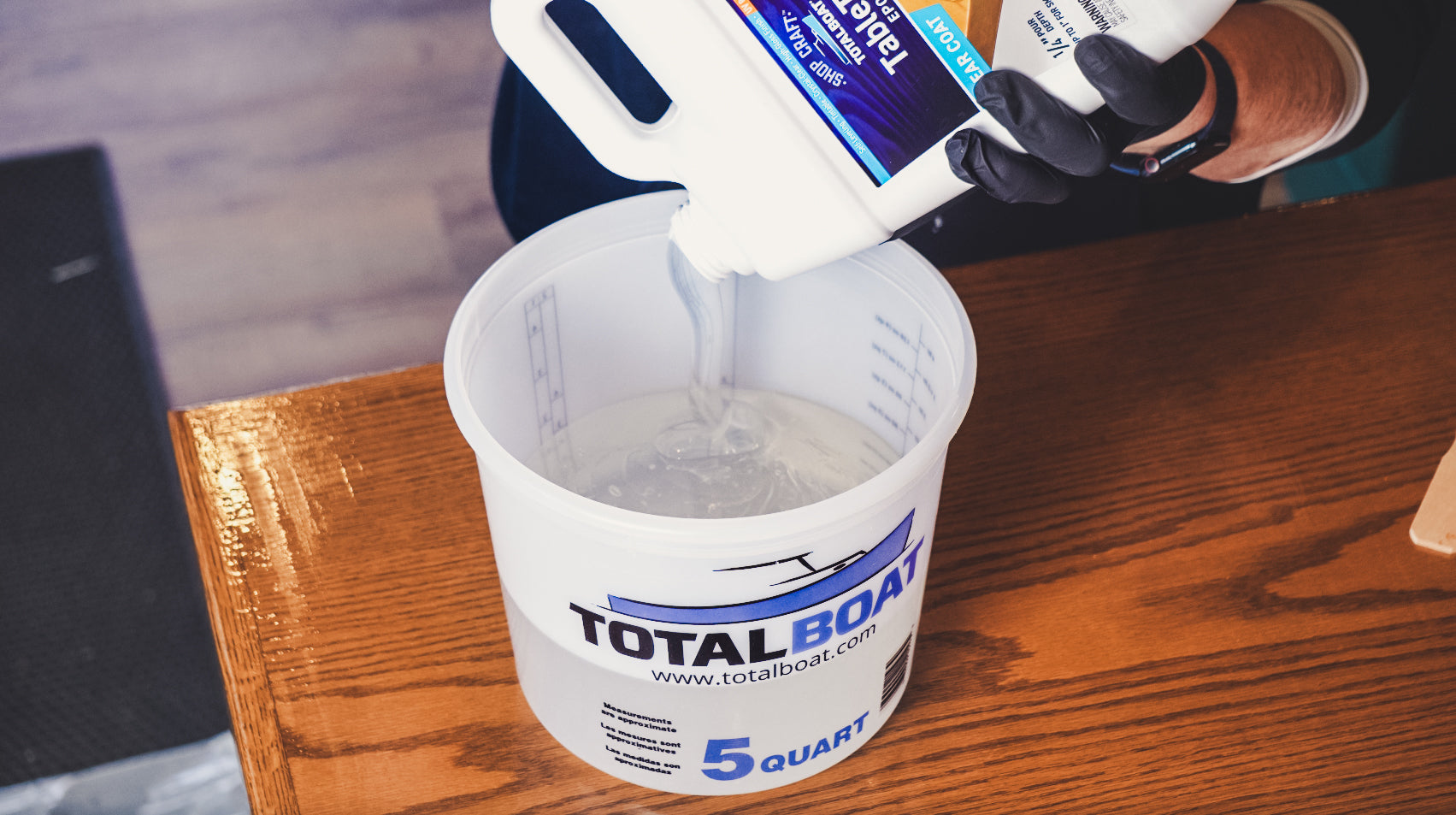
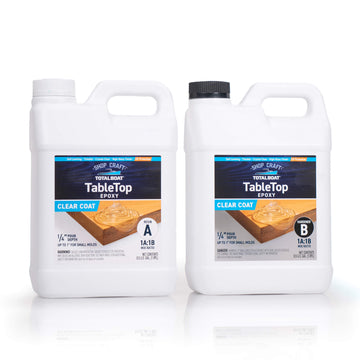
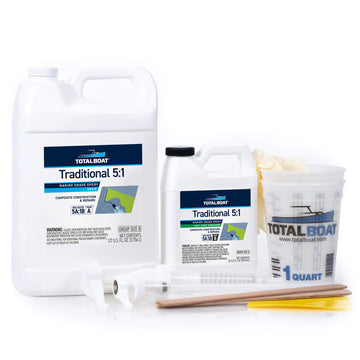
The key here (or for any project) is choosing the right epoxy, and that will depend on whether you plan to pour in small layers, or do 1-2 deeper pours.
Keep in mind: Epoxy serving boards should be used for displaying and serving food, and never as a cutting surface.
Tips for this project:
- Use alcohol inks or mica powder pigments to create rich, marbled color effects
- Add pressed flowers or herbs for an organic, artisan look
- Almost any shape mold will work for a serving board, however the fishtail and longboard mold shapes produce stunning silhouettes
- Woodworkers: lay strips or scraps of contrasting hardwood into the mold before pouring for a striking wood-and-resin serving board — see the "Make It Your Own" section below for more on this technique

Serving board made by LaMaree Art with TotalBoat ThickSet Epoxy
2. Resin Trays with Handles
Resin trays are one of the most versatile projects you can make with a large silicone mold. Whether you're going for a glam vanity tray, a sophisticated entryway catchall, or a colorful ottoman centerpiece, the mold does most of the shaping work for you.
A large square or rectangle mold works perfectly here. Go bold with opaque pigments and metallic accents, or keep it elegant with a translucent pour and a single dried flower arrangement suspended inside. You can customize even further with your choice of handles – buy some pre-made or make your own with a handle mold!
Tips for this project:
- Embedding small objects like crystals, coins, or shells adds a personal, curated fee
- Gold or silver leaf flakes give trays a high-end, luxe look with almost no extra effort
- Securely attach handles by drilling into the cured piece to embed the handle stems and use epoxy or CA glue to adhere them.
Pro Tip: If you plan on embedding objects into your tray (or any of the projects listed here), you may be able to use a table top epoxy or artist resin because these can be done in multiple pours. Make sure to always check your epoxy application instructions and only pour up to the recommended depth.
3. Bookends
Bookends are a surprisingly satisfying large mold project because the finished pieces are genuinely functional. Using a deep pour epoxy in a large square or hexagon mold, you can cast two matching pieces that hold their own on any shelf.
Because bookends need real mass to do their job, this is a project where a deep pour epoxy formula, designed to cure in thick sections without overheating, is the right choice.
Tips for this project:
- Pour both bookends from the same batch so the color matches perfectly across the pair
- Embedding natural elements like wood slices, river stones, or dried moss creates a beautiful, organic aesthetic
- Add felt or cork pads to the base of each cured piece to protect shelves and prevent sliding. You can use CA glue to easily adhere whatever shelf protection you choose
- Lay a single piece of live-edge wood or a cross-section slice into the mold before pouring for a bold wood-and-resin bookend with serious visual weight
4. Plaques and Signs
Plaques and signs are an intermediate project simply because they often require a CNC machine. However, with some creativity, you can still create a sign by embedding letters in a layered pour. A large square or rectangle mold can produce a solid, polished slab that makes a stunning base for a custom plaque or sign, however you choose to add your letters.
For makers with access to a CNC machine, engraving directly into the cured slab is the most clean and efficient option; the precise lines of a CNC-routed letter or design look truly professional, and the recessed channels can be filled with a contrasting color of epoxy for a striking inlay effect.
If you do not have a CNC machine, you can still get creative with how you add letters to your epoxy mold by using stickers, vinyl decals, a Cricut, embedding letters in layers, and paint pens!
Tips for this project:
- Dark, moody tones like navy, forest green, charcoal, or slate create striking contrast for light colored lettering (and vice versa)
- Test your lettering method on a small scrap slab before committing to a full pour
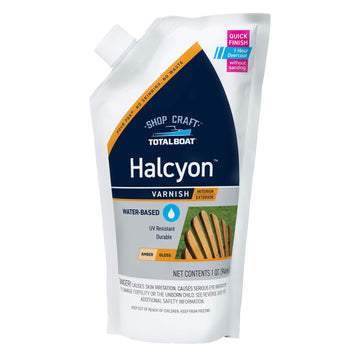
Pro Tip: If your finished plaque will be displayed somewhere that gets sunlight or any UV exposure, we strongly recommend finishing it with a UV-stable varnish [link to Halcyon Varnish] before hanging. A UV-stable topcoat is insurance for a piece you worked hard to make.
5. Dried Floral Keepsakes and Memory Pieces
Large silicone molds are perfect for preserving sentimental things. Wedding bouquet and memorial service flowers are among the most common preservations that resin artists will make.
The depth of a large mold means you can arrange botanicals in layers, creating a three-dimensional preserved display. Crystal-clear epoxy keeps every petal and stem visible and vivid for years. A large hexagon or circle mold works especially well here because the shape itself feels intentional and decorative on a shelf or tabletop.
Tips for this project:
- Flowers must be completely dried before embedding — any residual moisture will cloud the resin. Use silica gel to preserve flowers in their natural shape (save your pressed flowers for thinner molds)
- Pour in stages: add a thin base layer, let it gel, arrange your botanicals, then pour the encapsulating top layer. If your mold is 3in or more in depth, you may need to do multiple top layer pours
- Work with a
low-viscosity epoxy made specifically for casting and deep pours - A dark opaque background (base layer pour) creates a beautiful dramatic effect

6. Small Side Tables
This is a project that can stop people in their tracks! A large square or circle mold can produce a solid epoxy slab thick enough to function as the top of a small side table or accent table. All you need to complete the piece is a set of legs.
A river-style pour is a natural fit here: two tones representing "banks" with a clear or translucent center channel creates the illusion of flowing water and gives your table an instant conversation-starting focal point. You can also go bold with a single saturated color or use mica powder for a swirling metallic design. Because the slab will bear weight, you’ll want to use a deep pour epoxy formula designed for thick, structural castings.
Tips for this project:
- A large square mold (10" x 10" x 3") produces a compact, substantial slab. Pair it with hairpin legs for a mid-century modern look
- A circle mold makes a beautiful round side table top. Add three or four tapered wooden legs for a warm, organic feel
- Sand through progressive grits (80 → 120 → 220 → 400) and finish with a polishing compound or a flood coat for a glass-smooth surface. For more tips on how to polish and smooth epoxy resin check out this blog post.
- Seal the underside with a thin coat of epoxy before attaching legs to prevent moisture absorption and keep the slab stable
- For a true river table effect, set two pieces of live-edge wood inside the mold on either side and pour your epoxy in the middle. The wood does the heavy lifting visually and adds structural mass to the finished top
- Top with a table top epoxy for a glossy, hard surface
Pro Tip: You can create a side table out of the floral preservations like described in the previous project!

Preserved floral block side table by @asterandrosepreservation
7. Longboard Coaster Sets
Here's another project for makers that love a challenge and have more advanced tools in their workshop. A longboard mold produces a full-length slab that can be cut down into a matching set of coasters once the epoxy has fully cured. The result is a cohesive, coordinated set where every piece shares the same pour, the same color story, and the same beautiful patterning — something you simply can't replicate by making coasters individually.
To cut the cured slab, you'll need the right equipment: a table saw with a fine-tooth blade, a circular saw, or a tile saw with a diamond blade all work well for cutting epoxy cleanly. Take your time with each cut, keep the blade cool, and sand the freshly cut edges smooth before finishing.
This is also a wonderful project for woodworkers with offcuts on hand; simple lay strips of contrasting wood scraps directly into the longboard mold before pouring, and each coaster in the set will have its own natural wood inlay running through it.
Tips for this project:
- Let your epoxy reach a full cure, not just a demold cure, before cutting. A fully hardened slab cuts cleaner and is less likely to chip or craze at the edges
- Plan your cuts before you pour: decide how many coasters you want and what size, then map out the cut lines on the mold so your design is centered and balanced across every piece
- Wood scraps laid lengthwise in the mold before pouring will run as a continuous stripe through every coaster in the set to create a stunning cohesive effect with minimal effort
- Finish each coaster with cork or felt feet on the bottom to protect surfaces

8. Epoxy Clocks
If you haven't seen an epoxy clock yet, prepare to want one immediately. A large circle or hexagon mold produces the perfect slab for a wall clock: thick enough to feel substantial, smooth enough to need no framing, and wide enough to make a real statement on any wall. Once the slab is cured and finished, a simple clock mechanism is mounted through a drilled center hole in the back, and your hands are attached to the front.
The face of the clock is where your creativity gets to shine. Swirling ocean pours, galaxy-inspired dark bases with silver and gold fleck, or a clean minimal pour in a single bold color, every aesthetic works beautifully at clock scale. Because the face is on permanent display, this is a project worth spending extra time on the finishing: a well-sanded, polished epoxy face has a depth and luminosity that looks artistic on the wall.
Tips for this project:
- Use a circle or hexagon mold for the most clock-like silhouette — both shapes work beautifully as a finished piece
- Mark your center point before the epoxy fully cures so you know exactly where to drill for the clock mechanism post
- Clock hands come in a wide range of styles: choose a finish (gold, black, brass, silver) that complements your pour before you start mixing

Epoxy wall clock by Created by Jenni
Make It Your Own: Wood Scraps, Slabs, and Offcuts
One of the most exciting things about large silicone molds for woodworkers is how naturally they work with wood. Every project on this list can be elevated by incorporating wood scraps, offcuts, and live-edge slabs. The combination of natural wood grain and glossy, colorful resin is one of the most sought-after aesthetics in the maker community right now, and it's far more approachable than it looks.
The concept is simple: arrange your wood pieces inside the mold before pouring, then fill the remaining space with epoxy. The resin flows around, between, and underneath the wood, encapsulating it completely and locking everything into a single cohesive slab once cured.
Depending on how much wood you add and how you arrange it, the result can range from subtle to dramatic.
Things to keep in mind when working with wood and epoxy:
- Wood must be dry before it goes into the mold. Moisture in the wood will cause bubbles, clouding, and poor adhesion between the wood and resin
- Seal the wood with a thin coat of epoxy before your main pour. This locks in any residual moisture and prevents air from bleeding out of the wood grain into your clear resin — a common cause of frustrating bubbles around wood edges
- Use a deep pour epoxy for thicker wood-and-resin slabs. The wood adds mass and can trap heat; a formula designed for deep pours is safer and more predictable
- Secure wood pieces in place before pouring; small offcuts can float or shift as epoxy fills the mold. A small dab of CA glue to the mold floor holds pieces exactly where you want them, or use a weight to hold them down before pouring and while the epoxy cures
- Don't be afraid to use scrap. Irregular shapes, rough cuts, and mixed species all work — the resin ties everything together and makes even humble offcuts look intentional and beautiful. TotalBoat ambassador La Maree Art does a wonderful job of using wood scraps mixed with epoxy to create stunning functional pieces
- After curing, sand the full surface flat if wood and epoxy have settled at slightly different levels. A belt sander or hand planer gets you flat fast; finish by hand through progressive grits for a smooth, glassy top

Ready to Start Pouring?
The best thing about working with large silicone molds is how much they simplify the process. No building a mold from scratch, no worrying about leaks, no wrestling with tricky surfaces — just mix, pour, and let the epoxy do its thing. Whether you're making a gift, decorating your home, or starting to sell your work, or just want to use up some wood shop scraps, a large mold is one of the best investments you can make in your resin toolkit!
Browse TotalBoat's full selection of epoxy resins to find the right formula for your next large mold project. And if you make something you're proud of, we'd love to see it: tag us on social media and show off what you've built!