












Epoxy Resin vs. UV Resin
Which One Is Right for Your Project?
April 2026
tl;dr: Epoxy resin and UV resin aren't competitors — they're different tools for different jobs. The right choice comes down to your project size, how much time you have, and how much wear the finished piece needs to handle.
Can you use UV resin instead of epoxy? It's one of the most common questions beginners and experienced makers ask alike — and the honest answer is: it depends. The two resins look similar, finish similarly, and are often sold side by side, but they behave very differently once you're actually working with them. In this guide, we'll break down everything you need to know so you can pick the right resin for the right project, every time.

What Is Epoxy Resin?
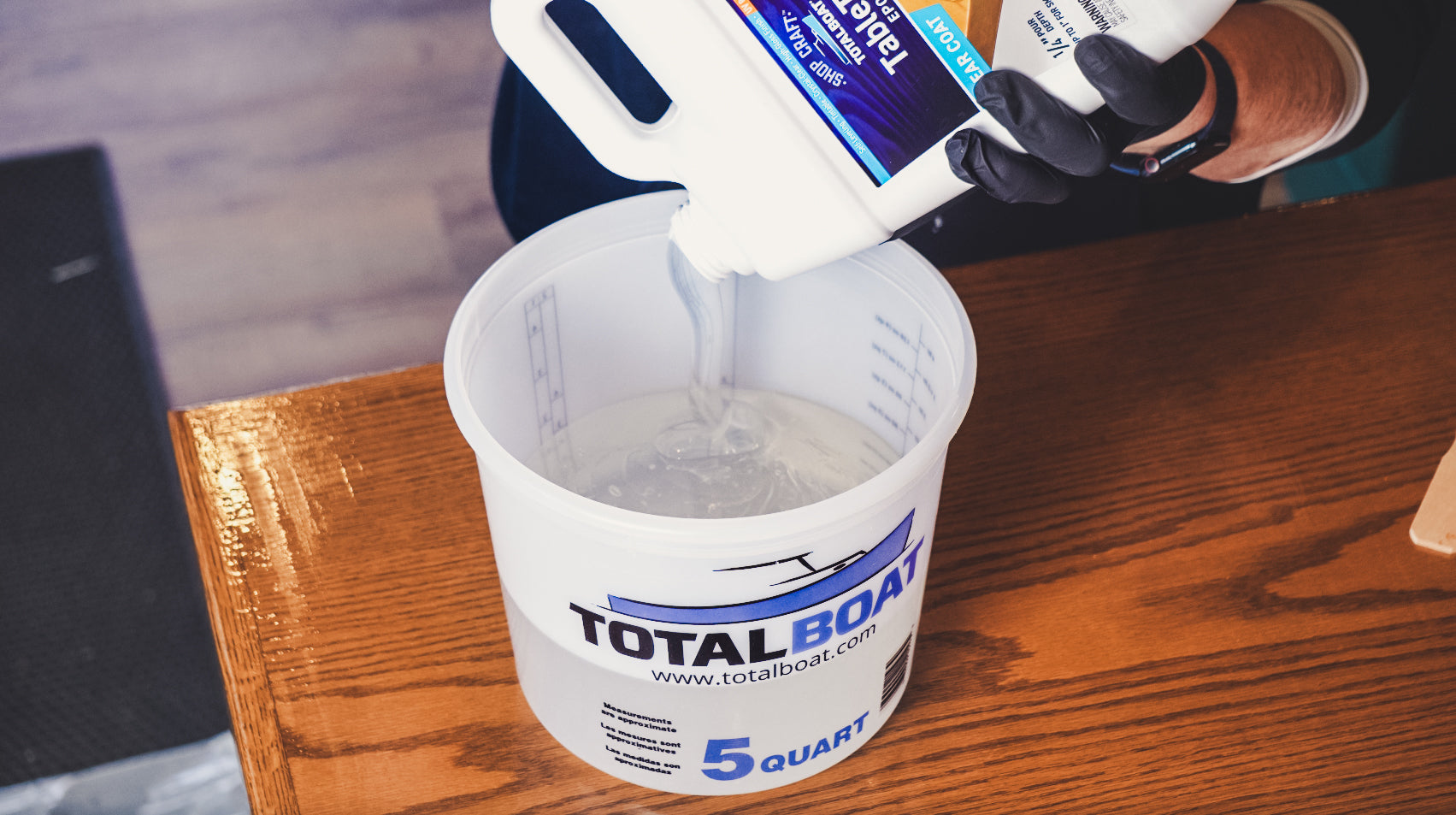
Epoxy resin is a two-part system made up of a resin and a hardener. When you mix these two components together in the correct ratio, a chemical reaction begins and over the next 24 to 72 hours, your liquid mixture slowly transforms into a hard, glossy, incredibly durable finish.
That chemical reaction is actually exothermic, meaning it generates heat as it cures. This is why the amount of epoxy you mix matters: larger volumes generate more heat, which is why "deep pour" epoxy formulas are specially designed to cure slowly and prevent cracking or boiling in thick layers.
Epoxy is the workhorse of the resin world. It's used in everything from DIY crafts and river tables to woodworking, marine repair, construction, and aerospace manufacturing.
Best for: Large projects, deep pours, furniture coatings, coasters, tumblers, countertops, woodworking, and any project that needs to stand up to heavy use over time.
What Is UV Resin?
UV resin (short for ultraviolet resin) is a one-part system — no mixing required. It comes ready to use straight from the bottle and stays liquid indefinitely as long as it's kept away from UV light. Expose it to a UV lamp or direct sunlight, and it hardens in as little as 1 to 5 minutes.
Technically, UV resin is a photopolymer. It contains light-sensitive compounds called photoinitiators that trigger rapid hardening the moment UV light hits them. This "cure on demand" quality makes UV resin incredibly convenient for small, fast, and detailed work.
Best for: Jewelry making, keychains, charms, small molds, quick repairs, small wood hole fills, miniatures, and any project that benefits from fast turnaround and precision.

Curing Time: The Biggest Practical Difference
If you're used to instant gratification, UV resin is going to feel like magic. A full cure in under five minutes means you can work on multiple pieces in a single session, fix mistakes quickly, and build up layers fast. For small business owners making jewelry or accessories, or for woodworkers who have tiny voids and holes to fill and want to move on to the next step quickly, that speed is a genuine game changer.
Epoxy resin, on the other hand, asks for patience. Initial set time is typically 2 to 6 hours, but full cure can take 24 to 72 hours depending on the formula, thickness, and temperature of your workspace. The sweet spot for curing epoxy is between 70–80°F (21–27°C) — too cold and your resin may stay sticky, too humid and you risk a cloudy finish.
That said, epoxy's longer cure time isn't always a downside. The extended working time, which is usually 20 to 45 minutes, gives you more room to arrange inclusions, work resin into grain and crevices, swirl colors, and perfect your piece before it starts to thicken. For woodworkers doing detailed inlay work or filling large voids, that extra time to manipulate the material is often exactly what you need.
Durability: Which Resin Holds Up Better?
Epoxy wins this category, and it's not particularly close. Once fully cured, epoxy resin forms a tightly cross-linked polymer structure that's scratch-resistant, flexible enough to handle thermal expansion, and highly resistant to chemicals and moisture. This is why it's the go-to for tumblers, tabletops, and coatings that will see daily use and why it's a staple in woodworking shops for sealing end grain, stabilizing punky wood, and creating hard-wearing surface coatings.
UV resin, while hard and glossy when cured, is more brittle over time. It's an acrylate-based material, which means it lacks the flex that epoxy has. On projects like tumblers, for example, UV resin can crack or peel after repeated exposure to heat and cold (like hot coffee followed by ice water) because it can't expand and contract the way epoxy does. Similarly, on wooden surfaces that naturally move with seasonal humidity changes, a UV resin coating applied too thickly may eventually crack or delaminate where epoxy would flex and hold.
UV resin is also more prone to yellowing over time when exposed to sunlight, though this varies significantly by brand. Epoxy is generally more resistant to yellowing, especially formulas labeled with UV inhibitors.
Bottom line: For anything that needs to last like furniture, functional items, wearable pieces, or structural woodworking repairs, epoxy is the more durable choice. UV resin is better suited to decorative items, surface touch-ups, and small repairs that won't see heavy wear.
Ease of Use: Which Is Better for Beginners?
UV resin is widely recommended as the best starting point for resin beginners, and it's easy to see why. There are no components to measure, nothing to mix, and no worrying about getting ratios wrong. You open the bottle, pour or apply, and cure. The fast results also mean you see immediate feedback on your work, which is helpful when you're still learning.
Epoxy has a steeper learning curve. You need to measure both components carefully — getting the ratio wrong means your resin may never fully cure, leaving you with a sticky, soft mess that can't be saved. Mixing also introduces air bubbles, which you'll need to remove with a heat gun or torch. And of course, you'll need to plan ahead, since your finished piece won't be ready for at least a day.
That said, once you get comfortable with epoxy, the possibilities open up dramatically. Deep pours, river tables, layered effects, large void fills, encapsulations — these are all projects where epoxy excels, and well worth the learning curve.
Project-by-Project Guide: Which Resin Should You Use?
Use UV Resin for:
- Small wood voids, knots, and checks — pin knots and surface cracks that are shallow enough for UV light to fully penetrate and cure (generally under 0.15” or 3–4mm deep)
- Quick surface repairs and touch-ups — fixing a fish-eye on a finished surface, spot-adhering loose veneer, or sealing small scratches between coats
- Jewelry (earrings, pendants, rings, charms) — fast cure, excellent clarity, no wait time between layers
- Keychains, bookmarks, and small accessories — small scale, quick production
- Doming — use as final top coat for small pieces like jewelry
- Resin art in thin layers — coating photos, sealing small surfaces
Use Epoxy Resin for:
- Larger wood voids, cracks, and live edge fills — any void deeper than a few millimeters where UV light can't reach the bottom to fully cure; epoxy is the only reliable option here
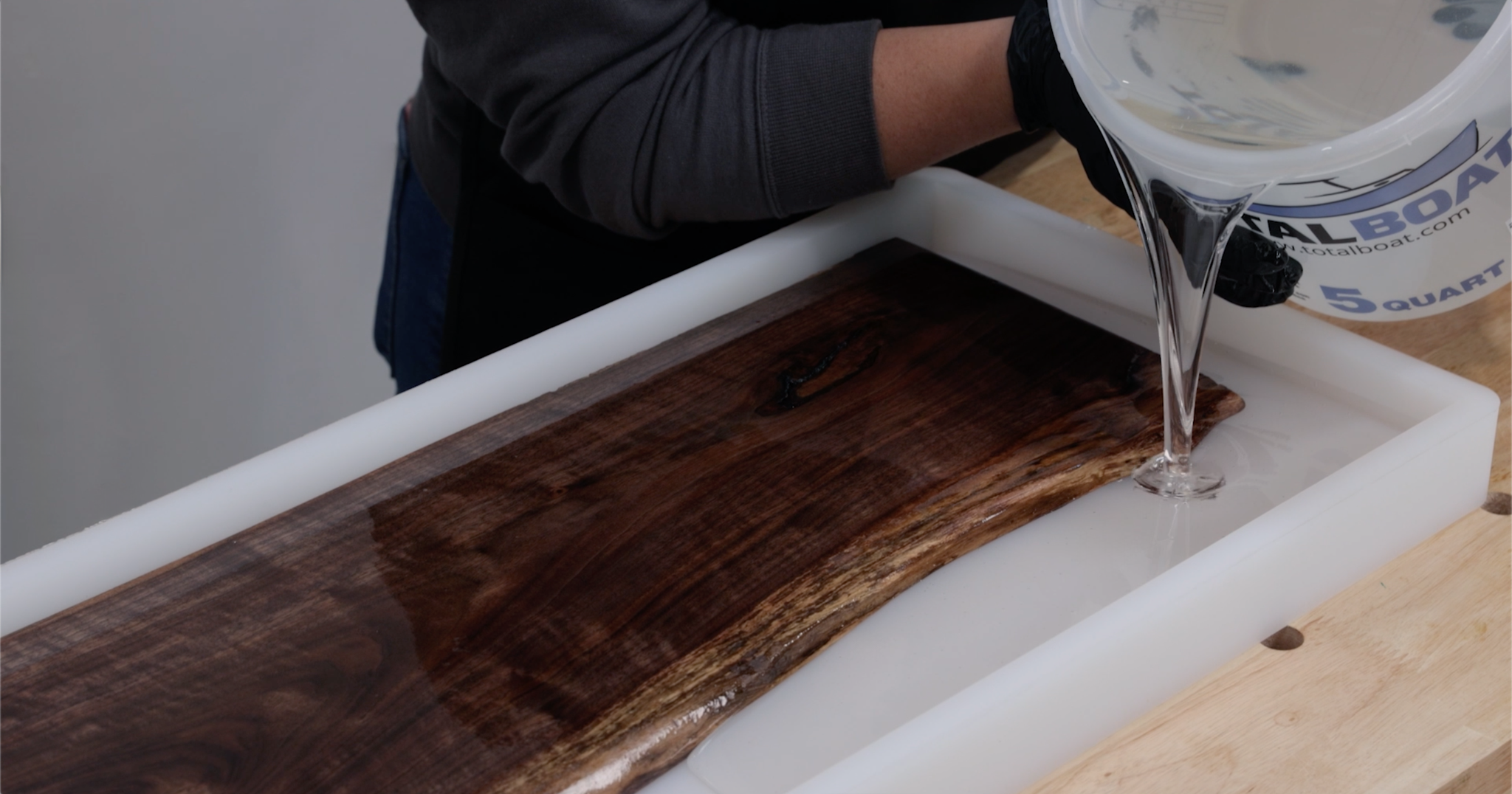
- River tables and furniture — deep pour formulas can handle thick layers over multiple pours
- Stabilizing punky or spalted wood — thin, penetrating epoxy wicks into degraded wood fibers and hardens them from the inside out
- Sealing end grain — a thin coat of epoxy locks out moisture before finishing
- Countertops and tabletops — scratch and chemical resistant
- Coasters and tumblers — flexible cure holds up to heat and thermal expansion
- Woodworking fills and seals — bonds tenaciously to wood, including oily and exotic species (with proper prep)
- Large casting projects — sculptures, decorative blocks, encapsulations
- Food-safe projects (charcuterie boards, serving trays, etc.) — look for FDA-compliant epoxy formulas specifically

Stabilizing wood with penetrating epoxy
Can You Use Both Together?
Absolutely — and many experienced makers do! Knowing when to hand off from one resin to the other is one of those workflow tricks that saves real time. Here are a few practical scenarios where using both makes sense:
Woodworking void fills: A live edge slab might have a large, deep void in the center which would call for epoxy because UV light can't reach the bottom. However, that same slab might also have a scattering of tiny pin knots and surface checks around it. In this situation, you can pour your epoxy fill first, let it cure, then go back and knock out all those small surface imperfections with UV resin.
Tumbler finishing: Build the main coating with epoxy for its durability and flexibility, then use UV resin to spot-fix any fish-eyes or thin spots without having to re-coat the entire piece.
Jewelry and mixed-media art: Use epoxy for any deep bezels or large cast elements where you need strength and volume, then use UV resin to add final surface details, secure small embellishments, or add a quick gloss topcoat without waiting overnight.
Furniture touch-ups: A dining table with an epoxy fill that gets a small chip or scratch during delivery doesn't need to be re-poured. A drop of UV resin, shaped and cured in minutes, can blend into the existing surface and be sanded flush the same day.
A Note on Safety: Both Require Precautions
Neither resin is something to handle casually. Both uncured epoxy and UV resin can cause skin sensitization and irritation, and their fumes can be harmful with prolonged exposure. UV resin tends to have fewer volatile organic compounds (VOCs), making it somewhat better for indoor use, but it still contains acrylates that can irritate skin.
For both types, always:
- Wear nitrile gloves
- Wear safety glasses or goggles
- Work in a well-ventilated area, or use a respirator mask
- Keep children and pets away from your workspace while working
So, Which Should You Choose?
Here's the honest answer: neither one is universally better. They're just different tools for different jobs.
Choose UV resin if you're new to resin, working on small-scale projects or quick repairs, filling shallow voids in wood, or need fast turnaround without the setup and wait time of a two-part mix.
Choose epoxy resin if you're working on larger projects, need maximum durability and strength, have deep voids or large surface areas to fill, or are creating functional items that will see regular use and wear.
And if you're serious about resin work — whether you're a jeweler, a woodworker, or somewhere in between — you'll almost certainly end up reaching for both. They complement each other perfectly, and knowing which one to grab for a given situation is one of the most useful skills you can build.
Do It Yourself But Not on Your Own
Comments
Thank you great information !