














Pros and Cons of Epoxy Countertops
Everything You Need to Know Before You Commit
April 2026
Epoxy countertops are having a serious moment. Scroll through any home renovation feed and you'll find stunning marble-swirl finishes, metallic pours, ocean-wave blues — all achieved without replacing your existing surface. It's easy to see the appeal.
But before you grab a kit and start pouring, it's worth taking an honest look at the full picture. Epoxy countertops come with real advantages, and some legitimate drawbacks that catch a lot of DIYers off guard. This guide covers everything: the pros, the cons, how epoxy stacks up against other materials, and tips to set yourself up for success so you can make the right call for your home.

What Are Epoxy Countertops?
Epoxy countertops are surfaces finished with an epoxy resin coating — a two-part mixture of resin and hardener that, once combined and cured, creates a hard, glossy, non-porous surface. Unlike granite or quartz, epoxy doesn't come in slabs you pick up from a supplier. Instead, it's applied directly onto an existing countertop as a refinishing or overlay product.
That means epoxy can go over almost any surface you already have: laminate, wood, concrete, ceramic tile, metal, or Formica. You mix the two components, add any colorants or pigments you like, pour it over the counter , spread it evenly, and let it cure. The result is a seamless, glossy finish that can mimic marble, granite, or an entirely original custom design.
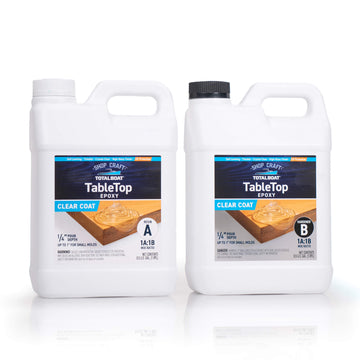
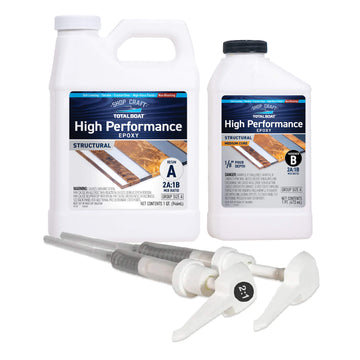
Epoxy is available as a DIY kit from most home improvement stores or online and it's one of the more satisfying countertop transformations you can pull off yourself when you go in prepared.
The Pros and Cons of Epoxy Countertops
Completely customizable appearance
Epoxy gives you creative freedom that no other countertop material can match. You can pour solid colors, swirl in marble veining, add metallic powders, embed objects, or recreate the look of granite all without the price tag of the real thing. Every surface is one-of-a-kind, which is a major draw for homeowners who want something that truly reflects their style.
Seamless, non-porous surface
Once cured, epoxy creates a smooth surface with no grout lines, seams, or gaps. That's great news for hygiene because there's nowhere for bacteria, mold, or moisture to hide. It also makes cleaning easy: a damp cloth and mild soap is all you typically need for everyday maintenance.
Durable and impact-resistant
When applied and cured correctly, epoxy is extremely hard and difficult to crack or chip under normal kitchen use. It can handle regular pressure and impact without splitting or splintering. A well-done epoxy countertop can last for many years without needing to be refinished provided you take care of it.
Moisture resistant
Because epoxy is non-porous, it doesn't absorb water. That makes it highly resistant to moisture damage, which is a genuine advantage in kitchens and bathrooms where surfaces see constant water exposure. Cold glasses, splashes, and wet dishes won't cause the surface issues they might on wood or laminate.
A high-end look without replacing your countertops
Epoxy lets you achieve a stone-like appearance without demolition, disposal, or waiting weeks for a fabricator. It goes on top of what you already have — laminate, concrete, wood, ceramic — and completely transforms it. That alone makes it one of the smartest surface upgrades a DIYer can tackle.
Goes over almost any existing surface
Epoxy is compatible with laminate, wood, concrete, ceramic tile, metal, and Formica. If your existing countertops are dated but structurally sound, epoxy can completely transform them without a full replacement — no demo required. It's one of the most accessible full-surface transformations available to a DIYer.

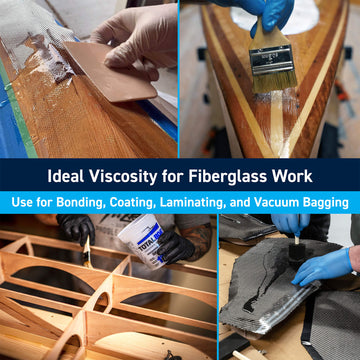
Get creative and add different effects to your countertops
The Cons of Epoxy Countertops
Heat sensitivity
This is probably the most important thing to understand about epoxy countertops. They are heat-resistant up to a point — a warm mug or a dish fresh from the microwave is generally fine — but they are not heatproof. Prolonged exposure to high temperatures can cause the surface to discolor, soften, or warp. Trivets and hot pads are a must for anything coming off the stove or out of the oven.
Can scratch over time
While epoxy is impact-resistant, it is not scratch-proof. Sharp knives, abrasive scrubbing pads, and heavy metal cookware can leave marks on the surface over time. Cutting boards are your friend here; you should never cut directly on an epoxy surface. A high-quality epoxy with a protective topcoat will hold up better, but some surface wear over time is realistic to expect.
Application requires practice
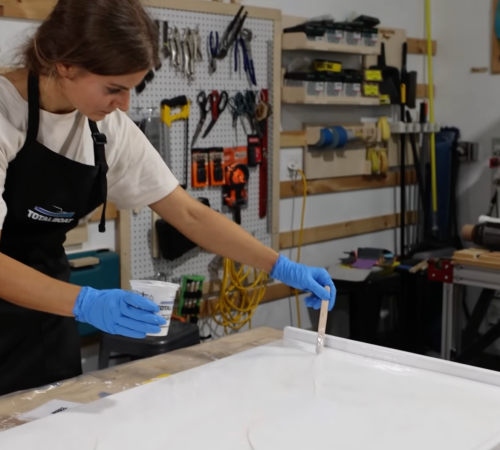
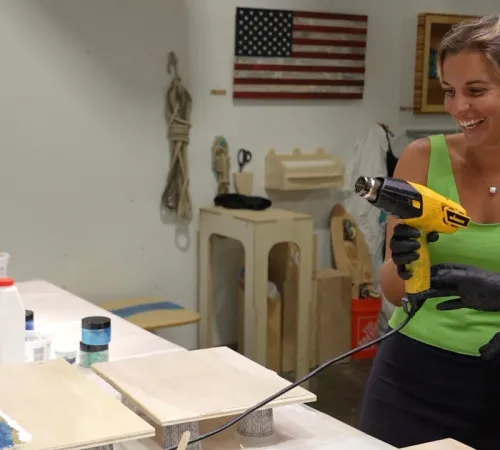
Epoxy is a rewarding DIY project, but it does have a learning curve. The mixture begins hardening within 20–30 minutes, so you need to work with confidence. Air bubbles can form and should be addressed quickly with a heat gun or torch. Epoxy also self-levels, meaning it flows toward edges — having a barrier in place beforehand keeps everything where it belongs.
Pro tip: Before committing to your countertops, practice your pour on a scrap piece of plywood or an old table. Getting a feel for how epoxy flows, how to move it, and how to pop bubbles makes a huge difference when it's time for the real thing.
Can yellow from UV exposure over time
Standard epoxy resin has a tendency to yellow when exposed to UV light consistently over time, especially on countertops near windows or in sunlit kitchens. The rate of yellowing depends significantly on the quality of the epoxy. Higher-quality, UV-stabilized products hold their color much longer, so this is one area where it really pays to choose a reputable formula.
VOCs during the curing process
Epoxy resin contains volatile organic compounds (VOCs) that are released into the air during the curing process. Proper ventilation is non-negotiable: open windows, run fans, and limit time spent in the room while the epoxy cures. Depending on the product, the space may need to be avoided for anywhere from 24 hours to a full week. Once fully cured, the surface is completely safe. It's a temporary step, but one worth planning around.
Proper surface prep
Epoxy bonds to what's underneath it which means the quality of your prep work directly affects the quality of your finished surface. Any grease, dust, or existing glossy coating that isn't properly addressed can interfere with adhesion and the final look. Take your time on prep and the rest of the process becomes significantly smoother. Always reference the product's technical data sheet for material specific preparation

How Do Epoxy Countertops Compare to Other Materials?
For homeowners who want a custom, high-design look and who are comfortable with the application process, epoxy is genuinely competitive. Where granite and quartz have the clear edge is heat resistance and long-term scratch durability. But neither can be applied by a homeowner on a weekend, and neither gives you the creative freedom that epoxy does.
Epoxy scores excellent on customization and is DIY-friendly with the right preparation. Laminate is also DIY-friendly but offers low heat resistance and limited design options. Granite and quartz are incredibly durable and heat resistant but require professional installation and offer far less customization.
Tips for Getting the Best Results with Epoxy Countertops
- Practice your pour first. Before working on your actual countertops, do a test run on a scrap piece of plywood or something similar to what your existing countertop is. Get comfortable with how epoxy flows, how to spread it, and how to pop bubbles. This will help ensure your confidence going into the real project.
- Prep the surface thoroughly. Sand down any existing glossy finish so the epoxy has something to bond to. Clean completely including any dust, grease, or debris as those will affect adhesion and the final look.
- Protect everything around the countertop. Use painter's tape and plastic sheeting to cover cabinets, floors, and walls. Epoxy flows like honey and will stick to anything it touches.
- Apply a thin seal coat first. This base layer helps prevent air bubbles from forming in the final coat and ensures an even surface for the main pour.
- Work quickly and confidently. Once you mix resin and hardener, you typically have a 20–40 minute window. Have your tools, colorants, and workspace fully set up before you mix.
- Use a torch or heat gun to pop bubbles. Run it lightly over the surface immediately after pouring to bring air bubbles to the surface and eliminate them before the epoxy sets.
- Safety First. Open windows, run a fan, and limit time spent in the room during curing. Wear gloves and protective eyewear throughout the process.
- Invest in quality epoxy. Better formulas are thicker, more UV-stable, and more heat resistant. Read reviews and choose a product specifically formulated for countertop use as it makes a noticeable difference in the result.
Commonly Asked Questions
How long do epoxy countertops last?
With proper care, a quality epoxy countertop can last 10 years or more. Durability depends on the quality of the epoxy used, how well it was applied, and how carefully the surface is maintained. Avoiding direct heat, sharp utensils, and harsh chemicals will significantly extend the lifespan.
Are epoxy countertops heat resistant?
Yes — but they are not heatproof. Epoxy can handle mild to moderate heat, like a warm plate or coffee mug. However, sustained high temperatures can cause discoloration or damage. Always use trivets or hot pads for cookware coming directly from the stove or oven.
Can you put epoxy over laminate countertops?
Yes, and this is one of the most popular applications. Epoxy adheres well to laminate surfaces provided they are properly sanded, cleaned, and prepped beforehand. It's a great way to completely transform dated laminate without a full replacement.
Are epoxy countertops food safe?
Most quality epoxy countertop products are safe for food contact once fully cured. The curing process involves the release of VOCs, which is why ventilation matters during application. After the full cure time (typically 72 hours to a week) the surface is safe for everyday typical food preparation (using cutting boards, plates and bowls to contain the food). Always check your specific product's documentation to confirm.
Never cut food directly on top of epoxy. Cutting food on an epoxy surface can both scratch the surface and introduce bacteria into those scratches.
Are epoxy countertops worth it?
For the right homeowner, absolutely. If you want a unique, customized look without replacing your existing surfaces, and you're willing to take the time to prep and practice, epoxy delivers stunning results. Go in with clear expectations, choose a quality product, and enjoy the process!
Do It Yourself But Not on Your Own
Comments
It would be nice if this article referenced the repairability of an epoxy surface.
Thank you for this. JohnZ
Important! Is the countertop or surface level??? If not level, the epoxy will slowly, but surely start moving to the low side. If this low side is the front edge of countertop, the fresh epoxy will start dripping off the edge creating a giant mess and ruining your job.
I’m considering applying epoxy to the counter tops in my sailboat. I have already done the cabin table and am very pleased with it. https://www.sailingeximius.com/2022/11/cabin-upgrade-pt-iii-new-table.html
However, when I did the Cabin Table, I brought it home and completed the job in my Garage. I do not have that option for the Galley and Head ( Bathroom ) Counter tops, they are built in and can only be replaced in sections. The existing galley counter top is Formica covered plywood. The Head Countertop is Wood ( Teak??) veneered plywood.
I’m wondering if anyone has epoxyied their boat countertops with the boat on the water? The boat is kept a a dock and it’s a boat! It moves around. So epoxy self leveling is a question.