














How to Remove Amine Blush from Epoxy
If you've ever applied epoxy, only to come back and find the surface looking waxy, cloudy, or strangely greasy, you've met amine blush. It's one of the most common surprises in epoxy work, and it trips up beginners and experienced builders alike. The good news is that amine blush epoxy residue is easy to identify and even easier to remove. This guide walks through what amine blush is, what it looks like, and how to remove it so your next coat of epoxy, varnish, or paint bonds the way it should.
What is Amine Blush?
Amine blush is a waxy or greasy film that can form on the surface of epoxy as it cures. It happens because epoxy commonly uses amine-based hardeners, a curing agent that combines nitrogen and hydrogen to react with the epoxy resin. By nature, these hardeners are hygroscopic, meaning it pulls moisture from the surrounding environment during the curing process. , If exposed to too much moisture or carbon dioxide, the amine creates an oily byproduct that rises to the surface instead of curing into the epoxy itself. Epoxy blush tends to show up more in cool, humid conditions, since there's more moisture in the air for the amine to react with, but it can appear even in a dry shop under the right circumstances. Some epoxies, like TotalBoat High Performance Epoxy, are low-viscosity and non-blushing, which does reduce how much blush tends to form. Even with a non-blushing formula, though, the cure of epoxy can still produce some amine blush on the surface, so it's worth checking any cured epoxy for blush before moving on to your next step.
What Does Amine Blush Look Like?
Amine blush doesn't always look the same from one project to the next, which is part of what makes it tricky to spot. Depending on the humidity level and the specific epoxy you're using, it can appear as:
- A thin, greasy, or oily sheen across the surface
- A dull or cloudy haze instead of a clear gloss
- A waxy film that feels slightly slick to the touch
- White, salt-like spotting in more severe cases
In some cases, amine blush isn't visible at all. It can be present even on a surface that looks perfectly clean and glossy, and it can form unevenly across a single piece, so one section may be fine while another just a few inches away is compromised. Because of that, it's worth treating every cured epoxy surface as if blush is present and cleaning it before recoating, rather than relying on a visual check alone.
Pro tip: If you're not sure whether blush is present, use your hands instead of your eyes. Run your fingertips across the surface, and if it feels sticky, greasy, or slightly tacky rather than smooth and hard, blush is likely there. You can also try a quick water test: drip a small amount of water onto the surface and watch how it behaves. Water that beads up unevenly instead of spreading into a smooth, even film is a good sign that blush is present and needs to be cleaned off before you recoat.
Can You Prevent Amine Blush from Forming?
There's no way to guarantee amine blush won't form at all, since it's tied to the basic chemistry of amine-based epoxy curing in the presence of moisture. That said, a few good habits can help:
- Control your environment. Working in a space with stable temperature and lower humidity reduces the moisture available for the amine to react with.
- Watch the dew point. Try to keep your workspace at least a few degrees above the dew point during application and cure to avoid condensation on the surface.
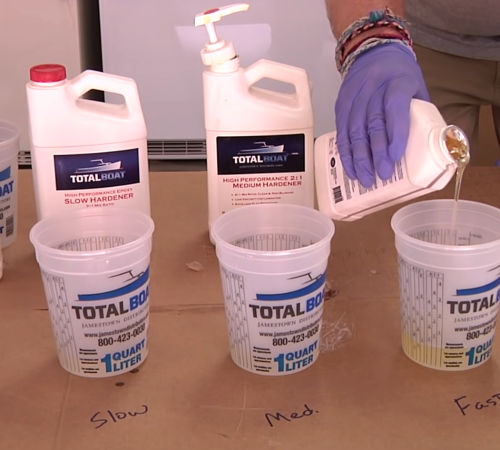
- Choose your hardener with cure speed in mind. Slower-curing hardeners tend to produce less blush than fast-curing ones, since the curing process produces less heat that can push amines to the surface.
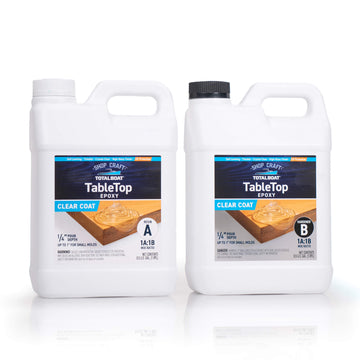
- Start with a non-blushing epoxy formula. TotalBoat offers several non-blushing epoxy systems, including options built for clear coating, laminating, tabletop pours, and hand layups. Starting with a formula designed to minimize blush gives you a head start, whatever the project.

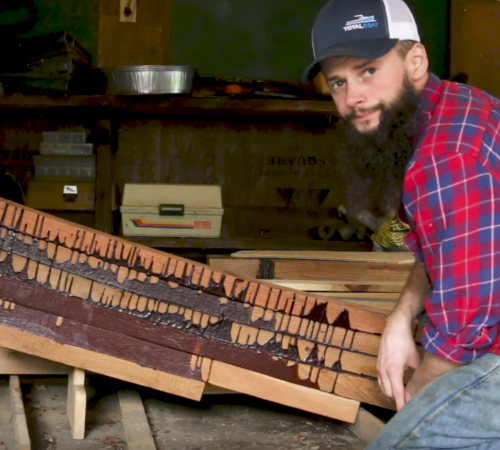
Example of what amine blush looks like on wood and epoxy
Why You Need to Remove Amine Blush Before Recoating
While amine blush on its own won’t damage your project, it becomes a real problem the moment you try to overcoat. That waxy layer sits between your cured epoxy and whatever you're applying next, whether that's another coat of epoxy, varnish, or paint, and it acts as a bond breaker. Coatings applied over amine blush can peel, delaminate, or fail to cure properly, which usually means stripping the work back and starting over.
Even if you’re not overcoating, leaving epoxy blush on the surface can dull the finish, create uneven gloss, or cause your finished piece to yellow over time. Taking a few extra minutes to remove amine blush is a small step that prevents a much bigger headache down the road.
How to Remove Amine Blush from Epoxy
What You'll Need
- A bucket of warm water for cleaning
- A mild soap
- A scouring pad
- Clean, warm water for rinsing
- Paper towels or a clean, lint-free cloth
Step-by-Step Removal Instructions
- Mix warm, soapy water. Add a small amount of mild soap to a bucket of warm water. Warm water helps loosen and dissolve the blush faster than cold water will, since amine blush is water-soluble and the heat will help dissolve the blush.
- Scrub the surface gently. Dip your scouring pad into the soapy water and scrub the entire epoxy surface, working in sections so you don't miss any spots.
- Change your water often. As you work, the water will pick up the dissolved blush. Swap it out for fresh warm soapy water regularly so you're not just spreading residue back across the surface.
- Rinse thoroughly. Once you've scrubbed the full surface, rinse it with clean water to remove any remaining soap or blush residue.
- Let it dry completely. Wipe the surface dry with paper towels or a clean, lint-free cloth, then let it air dry completely before applying your next coat of epoxy, varnish, or paint. Applying over a damp surface can introduce its own set of problems.
Common Mistakes to Avoid When Removing Epoxy Blush
Don't sand it off.
Sanding a blushed surface tends to clog your sandpaper almost immediately, and it can actually push the blush deeper into the epoxy rather than removing it.
Don't reuse dirty water.
Scrubbing with water that's already saturated with dissolved blush just redeposits it on the surface. Fresh water does the job faster.
Don't skip the rinse.
Any leftover soap residue can interfere with adhesion just as much as the blush itself, so a thorough clean water rinse matters.
Don't recoat a damp surface.
Give the epoxy time to dry fully after rinsing. Trapped moisture under a new coat can lead to delamination, discoloration, or other bonding issues.
Have questions about your specific epoxy project, whether it's a repair, a build, or a finishing job? Our tech support team is happy to help you troubleshoot amine blush or anything else that comes up along the way.