














How to Clean, Polish and Wax Your Boat
A freshly cleaned, polished, and waxed hull turns heads at the dock and protects your gelcoat from sun, salt, and grime. Working through the process in the right order saves you time and gets you a lasting shine, whether you're prepping a boat for the season or bringing a neglected hull back to life. A good polishing kit bundles the rubbing compound, finishing compound, wax, and polisher you need in one box, so the whole job is easier and more affordable.
Before you start, set up in a shaded, well-ventilated spot. Direct sun heats cleaning, polishing, and waxing products fast, and they'll dry on the surface before you can work them in, leaving extra residue behind.
This guide walks through machine buffing and polishing from start to finish.

Tools and Materials for this Project
- Nitrile gloves
- Protective eyewear
- Variable-speed polisher with a double-sided polishing pad and mandrel adapter
- Boat washing sponge or brush
- Quick-release masking tape
- Acetone
- Chip brushes
- Protective coveralls
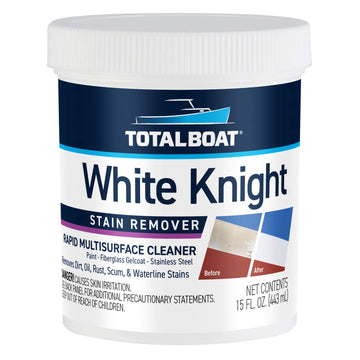
- Fiberglass stain remover
- Boat soap
- Dewaxer
- Eco-friendly solvent
- Rubbing compound
- Finishing compound
- Boat wax
- Cleaning and wiping rags
- Microfiber cleaning towels
Stay Safe First
Protect yourself before you touch a single product.
- Wear gloves and eye protection through every step below.
- Read the label on each product before you open it.
- Check the safety data sheet (SDS) for each product.
- Gather the gear each manufacturer recommends — that might mean a respirator, protective gloves, or clothing that covers your skin.
- Work in a well-ventilated space, and keep your work area shaded if you're outdoors.

Step by Step Guide: Clean, Polish and Wax a Boat
1. Remove Stubborn Stains (Optional)
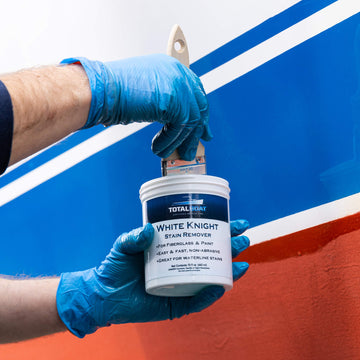
Learning how to clean a boat with rust, algae, or exhaust stains starts here. A marine fiberglass stain remover works on fiberglass, gelcoat, and painted hulls and transoms, lifting stubborn rust, scum, and exhaust stains, plus algae and scum at the waterline.
- Wear gloves and eye protection. Wet the stained area first, then test the stain remover in a small, hidden spot before treating the full surface.
- Apply a thin layer with a brush or clean rag.
- Let the stain remover sit for 10-15 minutes, then scrub lightly with a soft brush or sponge. Rinse thoroughly before it dries.
Pro tip: Don't let stain remover dry on the surface — it takes more scrubbing to remove. Tough stains may need a second application.
2. Clean the Boat
The next step in how to clean a boat is a simple wash with a gentle, biodegradable boat soap, which is safe to use in the driveway or at the marina.
- Add one cap of boat soap per gallon of water to a bucket.
- Rinse the boat first. Then scrub lightly with a soft, long-handled brush or a sponge soaked in soapy water, and rinse completely with clean water.
- Dry the surface by hand, or let it air dry before you mask, polish, or wax.
3. Mask Below the Waterline
Protect your bottom paint before you start buffing. Mask along the waterline with quick-release tape that won't leave sticky residue behind, so bottom paint doesn't end up smeared into your compound or wax.

4. Dewax the Hull
Every trace of old wax and contamination has to go before you apply rubbing compound. The right product depends on your finish.
- Dewaxing gelcoat: Wet a clean, lint-free cotton rag with a dewaxer or an eco-friendly solvent. Wipe the surface, then dry it with a second clean rag. Repeat this two-rag method, swapping in fresh rags often, until you've dewaxed the entire surface.
- Dewaxing two-part paints: A dewaxer or eco-friendly solvent often works here too, but check with your paint manufacturer first to confirm the solvent is safe for their system and won't void your warranty. Some manufacturers require proprietary products.
- Dewaxing one-part paints: Skip harsh solvents on one-part paints — they can strip, dull, or soften the coating. Instead, mix TSP with clean water, then add 2-5% Simple Green. This gentle blend removes wax without damaging the finish.
- For one-part paints, a soft scrub with a white or gray polishing pad also helps lift wax. Go easy — scrubbing too hard can dull the surface.
5. Buff the Boat
This step answers the real question behind how to buff a boat that's lost its shine to oxidation. A fast-cutting liquid rubbing compound removes heavy oxidation and 600-800 grit wet-sanding scratches.
- Apply rubbing compound with a clean cotton rag to a 2-foot by 2-foot area at a time. Don't let it dry completely before you buff it out.
- Buff with an electric polisher fitted with a wool compounding pad (not foam). Work section by section until you've covered the entire surface, then wipe away residue with a clean microfiber rag and clear water.
Pro Tip: Start slow with firm pressure, then finish at higher speed with a lighter touch for the best results. Working with a partner speeds things up — one person applies compound while the other runs the polisher.

6. Polish the Boat
Once the oxidation is gone, it's time to tackle how to polish a boat to a mirror finish. A finishing compound removes compound swirl marks and fine sanding scratches, leaving a glossy, glazed surface.
- Apply finishing compound with a clean cotton rag to a 2-foot by 2-foot area. Don't let it dry completely before buffing.
- Buff with an electric polisher and a wool polishing pad until you've covered the whole surface.
- Start slow with firm pressure, then speed up and lighten your touch to finish.
- Wipe away residue with a clean microfiber cloth and clear water, then dry the surface with a clean cotton rag.

7. Wax the Boat
The final step covers how to wax a boat for lasting protection. A wipe-on, wipe-off marine paste boat wax leaves a hard, protective finish.
- Start with a clean, dry surface. Using a soft applicator pad, work wax into small areas at a time with a circular motion. Don't let it dry completely.
- Buff off the wax with a clean, soft microfiber cloth to reveal a shiny, protected surface.
- Swap in a fresh microfiber cloth once yours gets saturated with wax — a clean cloth removes excess wax faster and with less effort.

Frequently Asked Questions
How often should I wax my boat?
Most boaters get the best results waxing every three to four months, especially if the boat lives outside or sits in salt air and direct sun. Boats stored indoors or under a cover can often stretch that to twice a year. Watch for chalking or a dull, faded look — that's your cue to wax again, regardless of the calendar.
What's the difference between rubbing compound and polish?
Rubbing compound is the aggressive first step: it cuts through heavy oxidation and levels deep scratches, but it leaves a light haze behind. Polish is the finer follow-up step that removes that haze and brings out the gloss. Start with rubbing compound on a badly faded hull, then follow with a finishing compound to complete the job — jumping straight to polish won't fix serious oxidation.
Can I buff and wax my boat by hand instead of using a machine?
Yes, hand application works fine for small spots, touch-ups, or a boat with light maintenance needs. For a full hull, a variable-speed polisher gets you a faster, more even result with less physical effort, and it's what this guide assumes above. Going the hand route? Use a soft applicator pad and plenty of elbow grease, and expect the job to take longer.
Ready to Get Started?
Questions about which products are right for your boat? Call TotalBoat Tech Support at (888) 986-6623 — we're happy to help.