












How to Color UV Resin
October 2026
UV resin cures fast under sunlight or a UV lamp, which is a big part of why it's such a popular choice for jewelry, coasters, fishing lures, and other small castings. Its clear, glassy finish is part of the appeal, but so is the ability to turn that clarity into any color you want. If you're wondering how to color UV resin, there are two easy paths: start with resin that's already tinted, or create your own custom colors with compatible colorants. Both work well once you understand what UV resin needs in order to cure properly, and this guide walks through each option along with the colorants that hold up and the ones you're better off skipping.

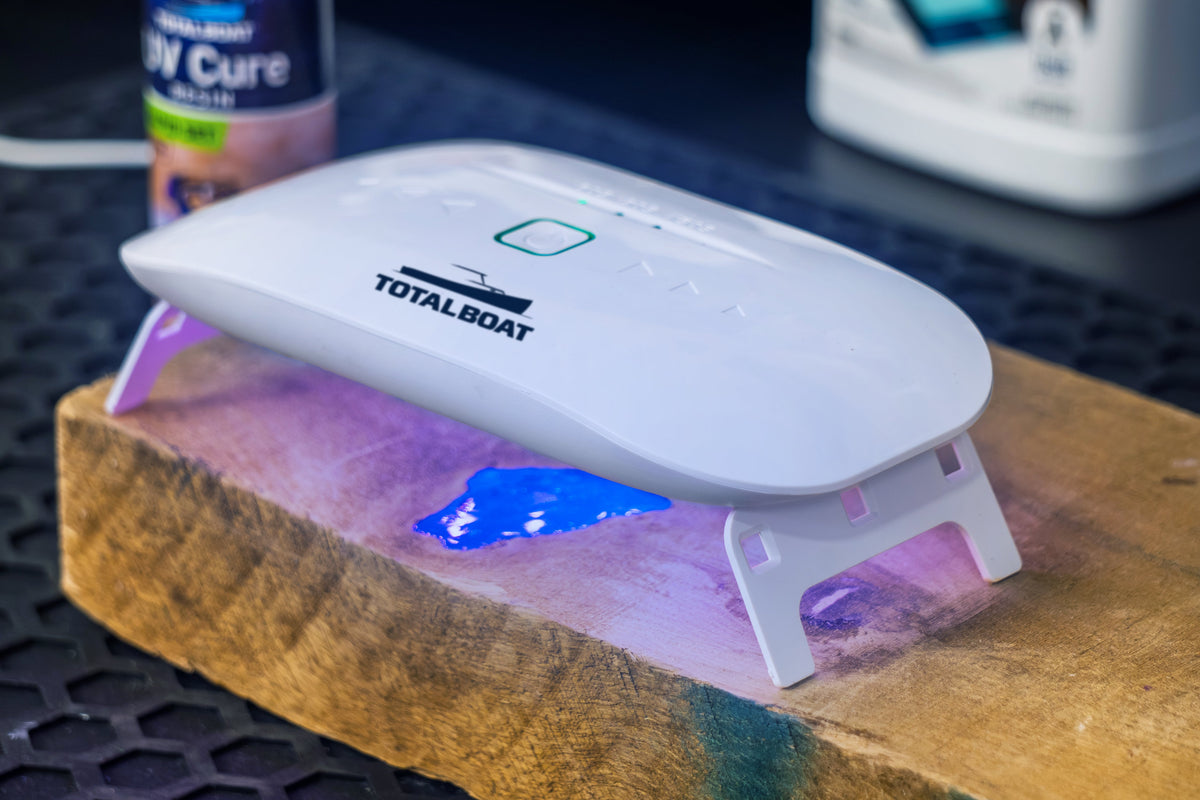
UV colored resin in white from the 'opaque' UV Resin Color kits by TotalBoat
Start With Pre-Colored UV Resin for the Easiest Results
If consistent color and nomixing matter more to you than experimenting with your own blends, pre-tinted UV resin is the best place to start. UV Resin Color Kits come pre-mixed in a range of colors and finishes, including glitter, translucent, and opaque, so there's no measuring, no color matching, and no risk of throwing off the cure with too much pigment. It's also an easy way to build a small collection of colors you can blend together for custom shades without ever opening a bottle of colorant.
How to Tint Clear UV Resin Yourself
When you want more control over your color, or your project calls for a shade you can't buy pre-mixed, tinting clear UV resin yourself is straightforward with the right supplies on hand.
What You'll Need
UV Resin (clear) - A UV-resin-safe colorant, such as mica powder, alcohol ink, or a pigment dispersion made for resin
A mixing cup - A stir stick or craft pick
- Your mold
- A UV lamp or direct sunlight
- Gloves and a well-ventilated work area
Steps
1. Pour your resin. Measure out only as much clear UV resin as you need for the piece you're making and pour it into your mixing cup.
2. Add colorant gradually. Start with a small amount of your chosen colorant and stir it in a little at a time. A drop or two of alcohol ink or a pinch of mica powder goes further than you'd expect.
3. Mix thoroughly, but gently. Stir slowly and scrape the sides and bottom of the cup so the color blends evenly, while trying not to whip air into the mix. Bubbles are much harder to work out of colored resin than clear.
4. Check the opacity. Hold the cup up to a light source. If you can't see any light coming through, you've added too much pigment and the UV light won't be able to penetrate deep enough to cure the resin all the way through. Thin it out with more clear resin if that happens.
5. Pour into your mold. Work quickly once the color is mixed in, since UV resin can start to set the moment it's exposed to any UV light, including what comes through a window.
6. Cure under UV light or sunlight. Follow the cure time listed on your resin's technical data sheet, and keep in mind that a tinted batch may need a little longer than clear resin to cure all the way through, especially with darker or more opaque colors.

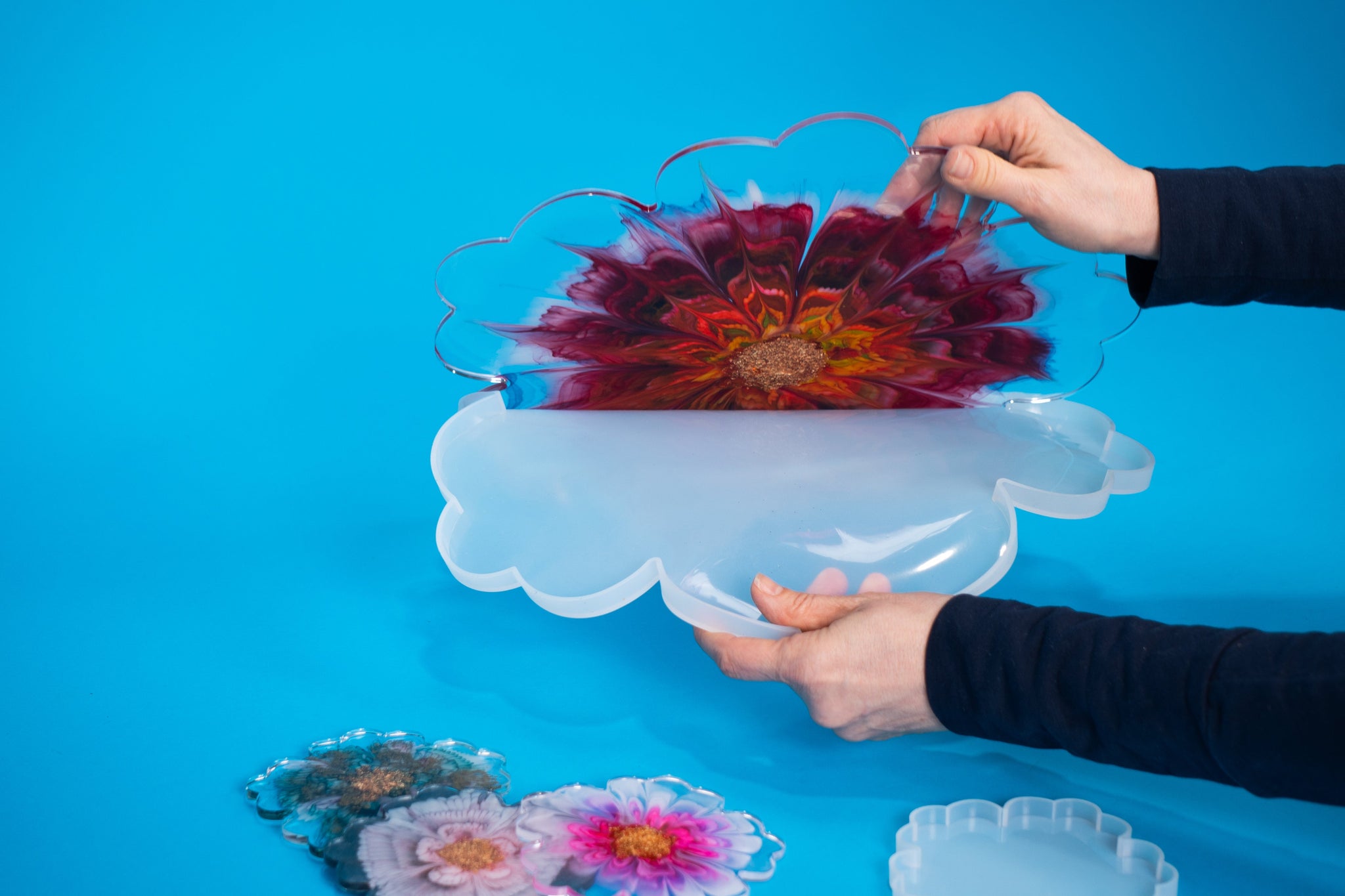
'Deep Ocean' from the TotalBoat Glitter UV Resin Color Kit
What to Use (and What to Avoid) When Coloring UV Resin
Not every colorant that works in epoxy resin is a good match for UV resin, and that's where a lot of the confusion around coloring resin comes from. Two-part epoxy has a longer working time and a chemical cure that tolerates a wider range of pigment types. UV resin cures in minutes under light, so whatever colorant you use has to blend clean, stay in suspension, and not block the wavelength that triggers the cure.
What works:
- Mica powders: blend easily and give a smooth, often shimmery finish
- Alcohol inks: mix in fast and produce vivid, translucent color
- Pigment dispersions and universal pigments made for resin: formulated to stay suspended and cure cleanly
What to Avoid:
- Water-based tints and food coloring: the water content can cloud the resin, cause separation, and interfere with a full cure
- Food coloring: it’s either water-based or oil-based, and therefore should be avoided for the same reasons as above
- Craft acrylic paint: most formulas are water-based too, so they carry the same risk of a soft or incomplete cure, so always be sure to test first
A good rule of thumb across any colorant: less is more. The more opaque your mix becomes, the harder it is for UV light to reach the resin at the bottom of a deeper pour, which slows the cure or leaves it soft in spots. Testing a small batch before committing to a full pour will tell you exactly how much colorant you can add and still get a clean, even cure.
Commonly Asked Questions
What can I use to tint UV resin?
Mica powders, alcohol inks, and pigment dispersions or universal pigments made specifically for resin all work well. They mix in cleanly, stay suspended, and don't interfere with how the resin cures under UV light.
Does it take longer to cure tinted UV resin?
Yes, tinted UV resin usually takes longer to cure than clear resin, and how much longer depends on the colorant you use and how much of it you add. UV light has to pass through the resin to trigger the cure, and pigment absorbs or blocks some of that light, so a light translucent tint may only add a small delay while a dense, opaque color can take noticeably longer, especially in deeper pours.
If your piece still feels tacky after the recommended cure time, give it additional exposure under your UV lamp or in direct sunlight, and flip it over to cure the underside if your mold allows. To keep cure times closer to clear resin, add colorant a little at a time, work in thin layers, and run a small test pour before committing to a full project.
Can you use food coloring to dye UV resin?
No, food coloring isn't recommended. It's water-based, and water content in UV resin can cause cloudiness, separation, or a cure that never fully hardens.
Can you tint UV resin with acrylic paint?
It's generally not recommended. Most craft acrylic paints are water-based, which carries the same risks as food coloring, even if a very small amount seems to work in a test pour. A mica powder, alcohol ink, or a pigment made for resin will give you a more predictable result.
However you decide to color your next batch of UV resin, a quick test pour will save you time and material before you commit to a full project. If you run into questions about curing, opacity, or which colorant fits what you're making, TotalBoat's tech support team is glad to help — give us a call at (888) 986-6623.