





















Epoxy Resin Safety and Clean Up 101
June 2026
Epoxy resin is one of the most versatile materials in any builder's toolkit. From boat building and repairs, to woodworking and resin art, it’s a shop item must-have. But working with it safely takes a little know-how. The chemicals involved are reactive by design, and the most common problems like skin irritation, respiratory sensitivity, and messy spills are almost entirely preventable with the right habits.
This guide covers everything from epoxy resin safety precautions and the protective gear you should wear, including how to clean up epoxy resin when it's wet, tacky, or fully cured.

Why Epoxy Resin Safety Matters
Most people work with epoxy without incident for years. The health risks are real, but they're strongly dose-dependent — meaning the more you're exposed, the higher your risk of developing a reaction. The good news: consistent epoxy resin safety precautions dramatically reduce that risk.
The two most important things to protect are your skin and your lungs. Epoxy resin and hardener are hazardous while liquid; once fully cured, epoxy is inert and poses no chemical risk. The window of concern is during mixing, application, and the cure period.
Sensitization — an allergy that builds from repeated exposures — can develop gradually or quickly, depending on the person. Once sensitized, even tiny amounts of epoxy can trigger a reaction. Protecting yourself from the start is far easier than managing an allergy after the fact.
How Epoxy Enters the Body
Understanding the main exposure routes helps you know where to focus your protection. There are three primary ways epoxy can enter or affect your body.
Skin contact: The most common route. Even brief, repeated contact with liquid resin or hardener can cause dermatitis. Partially cured sanding dust that settles on skin is also a significant exposure source.
Inhalation: Epoxy vapors are low at room temperature, but rise significantly in enclosed, poorly ventilated spaces or when the mix is heated. Sanding cured or partially cured epoxy produces fine dust that carries reactive particles deep into the lungs.
Ingestion: Less common, but possible when resin or hardener contaminates food, drinks, or surfaces that touch the mouth. Always wash your hands thoroughly before eating or touching your face after working with epoxy.

Xyla Foxlin wearing a respirator
Personal Protective Equipment (PPE)
Using epoxy resin safely starts with wearing the right gear. Here's what you should have on hand for any epoxy project:
- Nitrile gloves: Wear two pairs for extended projects. Change gloves regularly — resin soaks through thin gloves over time. Avoid latex; it offers poor chemical protection against epoxy.
- Safety glasses or goggles: Splash goggles are best for pouring and mixing. Safety glasses are fine for general work at a safe distance. Wearing these also helps prevent eye reactions to vapors.
- Respirator: For vapors, use a half-face respirator with organic vapor cartridges. For sanding, add a P100 particulate filter or use a dedicated dust mask.
- Protective clothing: Long sleeves and pants protect skin from drips and splash. Wear a disposable coverall or old clothes you don't mind ruining.
Pro Tip: Never use solvents, including acetone, lacquer thinner, or even vinegar, to remove epoxy from your skin. Solvents drive epoxy components through the skin barrier, dramatically increasing absorption and sensitization risk. Use a waterless skin cleanser or barrier cream instead, then wash with soap and warm water.
Workspace Setup and Ventilation
Good airflow is one of the simplest and most effective epoxy resin safety precautions you can take. Epoxy has low volatility at room temperature, but in small or enclosed spaces, vapor concentrations can build up faster than expected.
Tips for a Safer Workspace
- Work outdoors or in a well-ventilated area whenever possible. Cross-ventilation — air flowing in one direction through the space using open windows— is more effective than a single fan.
- If working indoors, use a fan to direct vapors away from your breathing zone, not toward your face.
- Avoid heating epoxy in unventilated spaces. Warm epoxy releases more vapor.
- Keep your mixing and pouring area clear of combustibles — curing epoxy in large masses generates significant heat.
- Never sand partially cured epoxy without a respirator. Even if it feels solid, epoxy may take up to two weeks to fully cure, and the dust can carry reactive compounds.
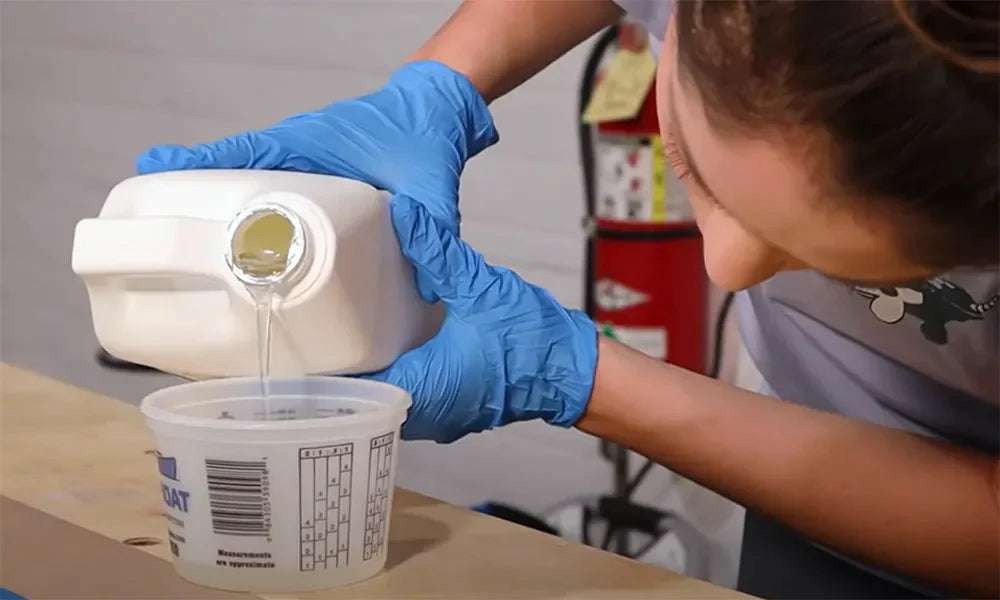
Watch for exothermic heat: Large masses of mixed epoxy cure via an exothermic reaction that generates significant heat. A full mixing cup left on the bench can reach temperatures high enough to melt plastic, burn skin, or ignite nearby materials. After mixing, pour your epoxy into a wide, shallow container to dissipate heat. Never leave a full pot of mixed epoxy unattended indoors.
If you develop a reaction: Stop working with epoxy immediately and avoid all exposure until symptoms fully clear — typically several days. If irritation persists or worsens, see a doctor. When you return to work, upgrade your PPE and review your handling procedures. A reaction is a signal and not something to push through.
Epoxy Resin Safety Data Sheets (SDS)
Every epoxy product comes with a Safety Data Sheet — a standardized document containing detailed information about health hazards, safe handling procedures, first aid measures, and disposal guidelines for that specific formulation.
Reading the epoxy resin safety data sheet for the product you're using is essential in project prep. Formulations differ: some hardeners are more corrosive, some resins have higher VOC content, and the SDS will tell you exactly what you're dealing with.
How to Clean Up Epoxy Resin
How you approach epoxy resin clean up depends on what stage it's in when the mess happens. If the epoxy is still liquid, partially cured, or fully hardened, there are different ways to handle.
Mixed epoxy (resin + hardener combined):
- Scrape up as much as possible first using a plastic scraper or stiff putty knife before reaching for any cleaners. This reduces solvent use and limits the spread.
- Follow with paper towels to absorb the remaining material. Work from the outside of the spill inward to avoid spreading it further.
- Clean the surface with acetone or lacquer thinner. A rag dampened with either solvent removes residue from tools and hard surfaces. Always wear gloves and work in a well-ventilated area. Note: solvents are for surfaces only — never use them directly on your skin.
- For large spills, surround with sand or clay cat litter before scraping. Do not use sawdust or cellulose materials — mixed epoxy's heat can cause them to ignite.
Unmixed epoxy resin (Part A only):
- Scrape and wipe up as much as possible with paper towels first.
- Follow with paper towels to absorb the remaining material. Work from the outside of the spill inward to avoid spreading it further.
- Clean remaining residue from surfaces and tools with acetone or lacquer thinner. Wear gloves and ensure good ventilation.
- Unmixed resin is less reactive than mixed epoxy, but still a sensitization risk — don't let it sit on skin. Use a waterless skin cleanser followed by soap and warm water.
Hardener (Part B only):
- Do not use solvent. Hardener is water-soluble — clean it from surfaces, tools, skin, and clothing with soap and warm water
- For large hardener spills, contain with sand or clay cat litter only. Never use sawdust or paper — the amine in hardener reacts with moisture in cellulose and can generate enough heat to ignite.
- Rinse skin thoroughly and promptly. Hardener is mildly corrosive and can cause chemical burns if left in contact with skin.
Cleaning Up Tacky or Partially Cured Epoxy
Partially cured epoxy - the gummy, sticky stage between wet and solid - is the trickiest to deal with. It won't wipe off cleanly, and it's still chemically active.
- Scrape off as much as possible with a plastic scraper while wearing gloves. Don't use metal tools on delicate surfaces.
- Apply a small amount of acetone or lacquer thinner to soften the residue, then wipe clean with a paper towel. Repeat as needed.
- On fabric or clothing, let the epoxy fully cure before attempting removal. Trying to clean tacky epoxy off fabric usually makes the stain worse.
- If tacky epoxy is on a project surface you want to keep, let it cure further before sanding it back.
Removing Fully Cured Epoxy
Once epoxy has fully cured, it's a hard, inert solid. The only practical way to remove it is mechanical, by sanding, grinding, or chiseling.
- Use a heat gun on low to slightly soften the epoxy before scraping — this makes it easier to pop off larger pieces from flat surfaces.
- Sand with coarse grit (60–80) to remove bulk epoxy, then progress to finer grits to smooth the surface.
- Always wear a dust mask or respirator and eye protection when sanding cured epoxy. Even though cured epoxy is chemically inert, the dust is still a respiratory and eye irritant.
Cleaning Epoxy Off Tools
The best time to clean tools is before the epoxy cures. Rinse brushes, rollers, and mixing cups immediately after use with acetone or lacquer thinner. To save time on cleanup, use disposable tools like foam rollers and plastic mixing cups for your epoxy work.
Pro tip: Line your mixing containers and work surfaces with plastic sheeting or large silicone mats before you start. Cured epoxy peels cleanly off polyethylene plastic and silicone, making cleanup nearly effortless and extending the life of your tools and bench.
Disposing of Epoxy Resin Safely
Liquid resin and hardener are chemical waste and should never be poured down the drain, into the trash as a liquid, or onto the ground. The proper approach is to render the epoxy inert before disposal.
- Mix small amounts of leftover resin and hardener together. Use the correct ratio, mix thoroughly, and allow it to fully cure. Once solid and cool, it can be disposed of in regular trash in most areas. Check your local regulations to confirm.
- Never put curing epoxy in an enclosed bin. Curing epoxy can get extremely hot, especially in a contained mass. Always leave it in an open container in a well-ventilated area, away from combustibles, until fully cured and cooled.
- Take large quantities to a hazardous waste facility. If you have a significant amount of unused liquid resin or hardener, take it to your local hazardous waste collection event or facility. Most counties offer these programs at no charge.
- Drain and dry empty containers before discarding. Puncture a corner of the container and drain any residue before disposing. No more than 3% of the container's total volume should remain inside.
Fire hazard: Never pour unused hardener onto sawdust, paper, or other cellulose materials — even in a trash can. The reaction between amine hardeners and moisture in cellulose generates heat that can cause spontaneous combustion.
Commonly Asked Questions
Can I use epoxy resin without a respirator?
For small, well-ventilated projects like a quick tabletop coat outdoors, the vapor risk is low enough that a respirator may not be strictly necessary. But if you're working indoors, in an enclosed space, for extended periods, or doing any sanding, a respirator with organic vapor cartridges (plus a P100 filter for sanding) is strongly recommended. When in doubt, wear it.
What happens if I get epoxy on my skin?
Remove it promptly with a waterless skin cleanser or barrier cream, then wash thoroughly with soap and warm water. Do not use acetone, solvents, or alcohol directly on skin as these drive epoxy compounds deeper into the skin. If irritation develops or persists, stop working and consult a doctor.
How do I clean epoxy resin off wood?
If it's still wet, scrape off as much as possible, then wipe with a rag dampened with acetone. Work carefully on finished wood, as acetone can lift existing finishes. If the epoxy has cured, use a heat gun on low to soften it, then scrape and sand. Always work with fresh sandpaper because epoxy builds up on it quickly.
Is cured epoxy safe to handle?
Yes — fully cured epoxy is chemically inert and poses no skin or respiratory risk from contact. The concern is only during the liquid and cure phases. Sanding cured epoxy still produces irritating dust, so always wear eye protection and a dust mask when sanding.
Epoxy resin safety doesn't have to be complicated. Wear your gloves, keep your space ventilated, clean up spills before they cure, and read the safety data sheet for your product. Follow those basics consistently, and the risk of problems is very low. The goal is to keep building — safely — for years to come! For more safety data information on specific TotalBoat products, please email info@totalboat.com.
Do It Yourself But Not on Your Own

Comments
Epoxy in a liquid or green state can be cleaned with white vinegar. This applies to tool cleanup and to skin also. There is no need for laquer thinner nor acetone.
Steve Koch
Epoxy in a liquid or green state can be cleaned with white vinegar. This applies to tool cleanup and to skin also. There is no need for laquer thinner nor acetone.
Steve Koch
I don’t have a tip or an idea but I do want to give praise to Total Boat for using their platform to promote safety and safe practices. Great job!!!
To remove hair or dust particles during the curing process that may have settled from the air, I use a silicone basting brush to scoop the debris out. Then wipe the brush with a paper towel and rubbing alcohol. It also makes a great spreader or to paint a thin coat on rocks etc.