












If there is one job that sailors dread more than fiberglass grinding, it might be marine plumbing. In the latest episode of The Duracell Project, Matt tackles the complex task of venting the composting toilet and fabricating a custom door for the head. It’s a masterclass in routing plumbing through tight spaces and using the right adhesives to ensure the ocean stays on the outside of the boat.
Here is how Matt used his favorite TotalBoat products to solve some of the toughest challenges in the head.
A "Convoluted" Venting Solution
The primary challenge this week was venting the composting toilet without allowing seawater to enter the system or letting "stinky air" waft into the fresh air intake. Matt’s solution involved routing PVC pipe from the cabinet, under the counter, and up through the deck into a tool compartment located between the boat's two Dorade boxes.
To make this system work, Matt had to drill through the deck—a move that always requires extreme confidence in your sealant.
Sealing the Deck with TotalBoat 52 Million
To ensure the deck penetration was absolutely watertight, Matt used one of our newest products, 52 Million Marine Adhesive Sealant, a very permanent adhesive sealant. Because the vent tube passes through the deck where water could potentially collect, the seal had to be bombproof.
Matt applied a G10 ring and the sealant to bond the PVC to the fiberglass and foam deck. He didn't hold back on the application, offering this piece of advice for critical through-deck fittings:
"This is a good example of where to use an embarrassing amount of glue because I really want this thing to be sealed and it doesn't matter how pretty it is it just needs to be watertight."
For those working with PVC, Matt also noted the importance of prep work: he sanded the PVC and cleaned it with acetone to ensure the 52 Million achieved a chemical bond as well as a mechanical one.


Quick Fixes with Thixo Fast
Even in a complex build like this, there are small components that just need to be stuck in place quickly and reliably. For the finishing ring that covers the vent tube inside the toolbox section, Matt grabbed his cartridge of Thixo Fast Cure.
We’ve seen Matt use the Thixo line extensively in the past, such as when he used Thixo Pro to repair damage at the bow or secure heavy systems inside the engine room.
In this episode, the fast-cure formula allowed him to glue the ring in place without mixing pots of resin or waiting all day for a cure.

Fabricating a Custom Head Door with High Performance Epoxy
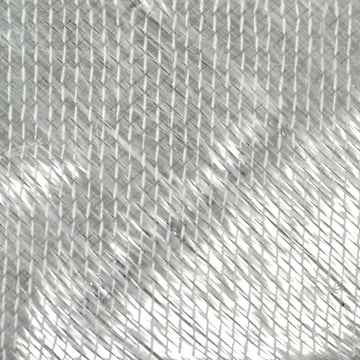
Once the plumbing was sealed, Matt shifted focus to the entrance of the head. Using some leftover 3/4-inch PET foam, he fabricated a lightweight, stiff door. To give the door impact resistance and structural integrity, he laminated a layer of 1708 glass and a layer of 6 oz carbon weave to both sides.
For this lamination, Matt used High Performance Epoxy. This is the same resin system Matt successfully used during the critical keel seal lamination project to bond fiberglass to the lead bulb. After the structural layers cured, he used the epoxy to vacuum bag a Moranti veneer to the door, creating a finish that matches the boat's interior aesthetic while acting as a clamp to eliminate voids.
Finishing the Systems
The episode wraps up with the installation of a Whale Gulper IC sump pump to handle the grey water from the shower and sink. While Matt admits plumbing isn't his favorite task—ranking it somewhere near painting and sanding—the result is a clean, functional system that moves Duracell one step closer to being a livable cruiser.
Check out the full video below to see how Matt manages the "spaghetti" of marine plumbing and creates a custom door from scratch!

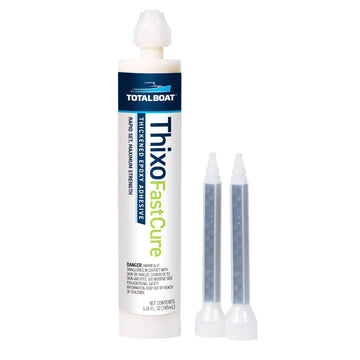

Thixo Fast Cure 2:1 Epoxy Adhesive


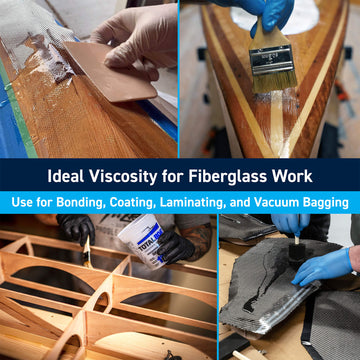
Clear High Performance Epoxy Kits


