














How to Apply Varnish in Hot Weather
June 2026
Varnishing in summer comes with its own unique challenges. Long days, dry wood, and plenty of daylight should be ideal conditions, but high temperatures introduce real challenges: varnish dries too fast, brush marks refuse to level out, bubbles set in before you can tip them off, and you can end up with a cloudy or uneven finish that took all day to make.
The good news is that working in the heat is absolutely manageable once you understand what's actually happening and how to get ahead of it.

How Heat Impacts Varnish
It Shrinks Your Working Window
Heat accelerates solvent evaporation, which means your wet edge time shortens considerably. A spar varnish like Lust, which already has a typical wet edge time of around 5 minutes in normal conditions, becomes even more demanding in the heat. Itcan skin over before you've had a chance to tip off brush marks or bubbles, locking imperfections into the finish. The faster it dries, the less time it has to self-level.
It Reduces Viscosity
Varnish gets thinner as the temperatures rise. While that might sound like a benefit, varnish that's too thin can sag on vertical surfaces and leave an uneven film thickness. It also tends to produce more bubbles from the brush, which then set quickly before they can pop on their own.
It Changes How the Substrate Behaves
When materials like wood or epoxy heat up, they behave differently when you go to apply. If the substrate has been baking in direct sun, the varnish can cure too quickly on contact and prevent proper adhesion between coats. Solvent-based varnishes have an ideal application range of 60-85°F for substrate, air, and varnish temperatures. Water-based varnishes typically have a slightly wider ideal window of 50-90°F.
It Can Work in Your Favor for Recoating
There is one upside: in warmer conditions, recoat windows can be significantly faster. TotalBoat Gleam, for example, can be overcoated in as little as 1 hour at 80°F, compared to 3 hours at 65°F or 8 hours at 50°F. Lust follows a similar pattern, with a 1-hour recoat at 72°F. That can let you build up multiple coats in a single day when conditions are right, as long as you're working in the ideal temperature range and not pushing past the upper limit.

Storing Varnish in Hot Conditions
Heat doesn't just affect varnish during application. How you store it between sessions matters too.
Varnish left in direct sunlight or a hot garage can thicken, skin over inside the can, or degrade faster than expected.
Here are some easy ways to prevent these issues:
- Keep cans in a cool, shaded space. A temperature-stable indoor area is ideal. Avoid leaving cans in your car, in direct sun, or anywhere that gets very hot during the day.
- Seal cans tightly after every use. Heat accelerates oxidation, and any air in the can speeds up skinning. Press plastic wrap down onto the surface of the varnish before sealing the lid to cut down on air contact.
- Let warm varnish cool before you apply it. If your varnish has been sitting in a warm space, bring it inside to reach a comfortable working temperature before applying. Warm varnish compounds all the problems that ambient heat already causes.
- Stir gently rather than shaking. Shaking a warm can introduces bubbles that are harder to work out when the varnish is already drying faster than usual.
Tips for Applying Varnish in High Temperatures
Work Early in the Morning
This is the easiest change you can make. Temperatures are lower, dew has burned off, and you'll have several hours of good working conditions before the heat of the day peaks. Once the sun is directly overhead and surfaces have been baking, it's usually time to stop and pick back up the following morning.
Stay Out of Direct Sunlight
The air temperature matters, but so does the substrate temperature. A wood surface that has been sitting in a cold boatyard overnight can be well below the ambient air temperature, even after the space warms up. Use a surface thermometer to check the wood before you begin, and if needed, warm the space for a few hours before varnishing to let the substrate temperature come up with the air
Thin Appropriately for the Conditions
Thinning is your most practical tool for managing heat. The right approach depends on which varnish you're using. If you’re using one of TotalBoat’s varnishes, here are some guidelines:
For Gleam, 5-10% Brushing Thinner 100 can be added to improve flow and working time in warm conditions. Gleam is designed to be ready-to-use for most brushing applications, so you're adding thinner as a warm-weather adjustment, not a requirement.
For Lust, thinning is generally expected regardless of temperature. Lust is a high-viscosity varnish, and the Technical Data Sheet (TDS) notes that some thinner is typically needed to achieve desired flow. In warm conditions, 5-15% Brushing Thinner 100 for brush and roll applications helps maintain a workable wet edge. Use the minimum amount needed and don't over-thin, as it will reduce gloss and extend dry time.
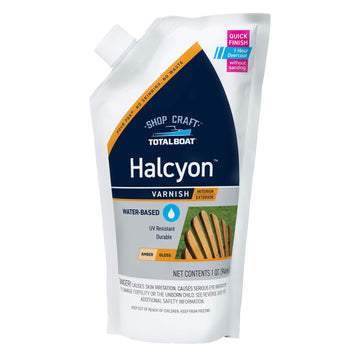
For Halcyon, thin only with clean, fresh water, up to 20% maximum, and only if needed to improve flow. Adding more than 10% water may lower the gloss or cause sagging on vertical surfaces, so start conservatively. Unlike solvent-based varnishes, thinning Halcyon's first coat does not improve penetration into bare wood.
For spray applications across all products, use the appropriate spray thinner and adjust based on equipment and environmental conditions.
Work in Smaller Sections
Heat reduces your working time, so don't try to cover large areas in one pass. Work in smaller, manageable sections and maintain a wet edge continuously as you go. Any section that tacks up before you come back to it will leave a visible lap mark in the finished coat.
Keep Your Materials Out of the Sun
Your brush, mixing cups, and varnish should all stay in the shade while you work. A brush that's been sitting in direct sun behaves differently on the surface, and warm containers can affect how you perceive your working consistency.
Watch the Weather Closely
Morning dew and evening condensation are significant risks in cooler months. Make sure your workspace is protected from moisture, and that your last coat of the day has enough time to fully skin over before nighttime humidity sets in. If you're working outdoors, keep a close eye on forecasted lows and dew point.
How-to Avoid Common Heat-Related Mistakes
- Know your hard limits. Most varnishes share the same absolute maximum: do not apply when the air, substrate, or varnish temperatures are above 105°F. The ideal working range for most of these products is 60-85°F. Operating near the top of the range is manageable with proper technique; pushing past it means you’re more likely to have to redo your coats.
- Monitor humidity as well as temperature. Hot days are often humid days, and high humidity can reduce gloss and affect dry time in its own way. We recommend keeping relative humidity below 85%, but always check your varnishes SDS for specific humidity limitations.
- Plan your last coat around dew. The final coat of the day needs enough time to skin over before evening moisture sets in. In summer, this means wrapping up in the afternoon, not at dusk.
- Check the substrate, not just the air. A thermometer reading of 82°F doesn't tell you the temperature of a wood surface that's been sitting in direct sun for hours. Surface temps on a sunny day can run significantly higher than ambient air temperature. When in doubt, touch the surface. If it's hot to the touch, wait.
- When conditions aren't right, don't push it. A coat applied outside the recommended temperature window can compromise everything below it. Waiting for better conditions is always faster than redoing the work.
Do It Yourself But Not on Your Own

Comments
Great tips on storage EXCEPT, you forgot that for 20 CENTS you can use Bloxygen and push oxygen and moisture out of your storage container and store them safely. Bloxygen is simple insurance and will allow users to use every drop.
I used this product on a wooden flagpole and was not happy with the results. It is sticky after drying. I have set in the sun for days and it remains sticky and tacky. Flag sticks to the wood pole.
I thing I’ve been doing is also using a foam roller
I’ve noticed much easier and also making sure you use the total boat sealer/ primer that you sell
My surfaces come out so much nicer now