









If you've been following TotalBoat for a while, the name Acorn to Arabella probably brings back some good memories. Steve Denette and his crew spent years building a 38-foot wooden sailboat from scratch in his backyard in Granby, Massachusetts, and we were right there with them for a huge portion of that journey. Arabella launched in 2023, and Steve has been sailing her ever since.
Now he's back in the shop — not for Arabella this time, but for Victoria.
Victoria is the tender. The work truck. The boat that gets dragged around, banged up, and generally asked to hold it together while the more glamorous vessel gets all the attention. And she had a problem: a transom made from salvaged 100-year-old mahogany that, as Steve put it in his latest video, is just "not making mustard these days."
So during a narrow two-day window while Arabella was getting her bottom work done, Steve squeezed in a full transom replacement.
Starting with the Right Wood
The original transom was beautiful material: reclaimed mahogany from "Big Victoria," full of history. But a century is a century, and rot doesn't care about sentimental value. For the replacement, Steve turned to larch (also known as tamarack, hackmatac, or juniper depending on where you're standing in Newfoundland). Donated by a neighbor named Rod across the bay, and dimensioned on Rod's thickness planer, the larch was a smart call: rot-resistant, dense, and a good bit harder than your average softwood.
Once the boards were prepped and ready, it was time to glue up the transom panel.
The Glue-Up: Thixo Fast Cure Does the Heavy Lifting
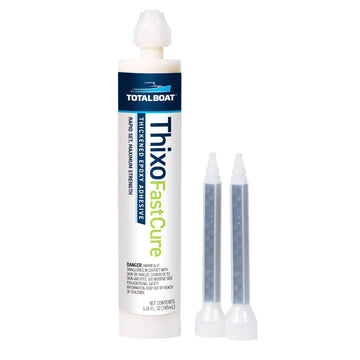
With cold temperatures and a tight turnaround before Arabella was back in the water, Steve reached for Thixo Fast Cure — a pre-thickened, two-part epoxy adhesive that cures more than three times faster than standard Thixo and is ready for high loads in just four hours.
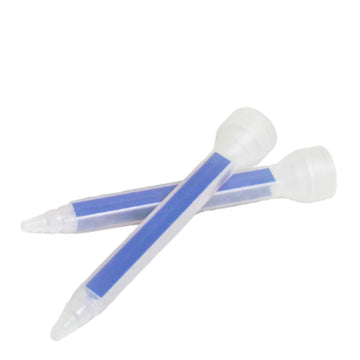
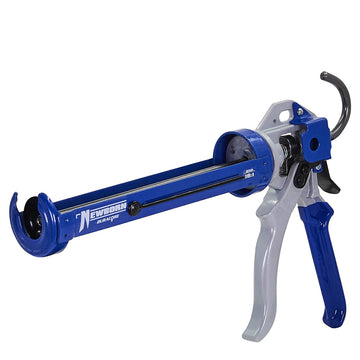
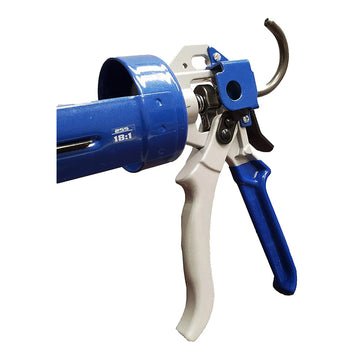
The cartridge-dispensed format was a real asset here. Applying epoxy to the edge of a board can get messy fast, but Thixo comes out of the tube with a thixotropic consistency that stays put rather than running — a detail Steve noted as he worked. The built-in static mixing tip handles the 2:1 ratio automatically, which means no separate mixing, no guessing, and less cleanup.
One thing Steve was deliberate about during the glue-up: clamping pressure. Epoxy doesn't behave like wood glue. Clamp too hard and you squeeze the adhesive out of the joint, leaving a glue-starved line that can fail. Steve applied just enough pressure to bring the boards snug, watched for glue squeeze-out along the seam to confirm full coverage, and gave it a final small adjustment to bring any gaps closed. Then he left it overnight to cure — not because Thixo Fast Cure needed that long, but because he had other things on the list and a few more days before the weather would cooperate for the surgery on Victoria herself.

After the panel cured, Thixo Fast Cure did double duty: Steve also used it to adhere the new transom to the boat, making it the adhesive for both the lamination and the installation.

Fiberglassing with High Performance Epoxy
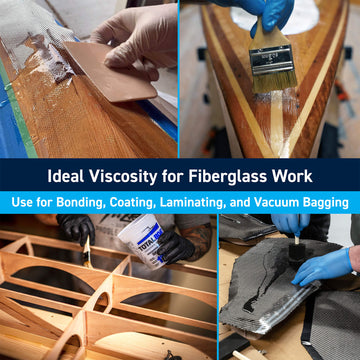
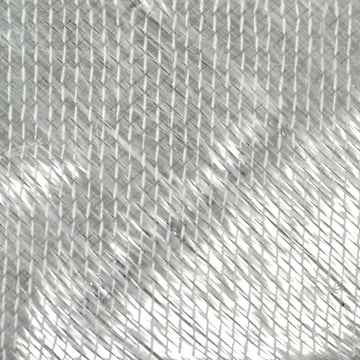
Once the transom was fitted and the glue lines were solid, Steve moved into the final phase: glassing both faces of the transom with fiberglass cloth and TotalBoat High Performance Epoxy.
High Performance is a low-viscosity, 2:1 epoxy system designed exactly for this kind of work. It flows easily into fiberglass cloth, wetting out the fabric thoroughly for a strong, consolidated laminate without trapping air or leaving dry spots. It cures clear and non-blushing, which simplified the process — no wash-down between steps.
Steve kept his approach practical. Victoria is a working tender, not a show boat, and he said as much on camera. The glass wasn't there to make the glue lines invisible; it was there to add structural reinforcement and create a sealed, paintable surface that could take a beating. He laid the cloth, applied epoxy to saturate it, then trimmed the excess at the paint line. Paint and glass would take it from there.
The transom wasn't fully finished by the time Arabella set sail the next morning, but Victoria was functional again and ready for passage.

The Bigger Picture
What makes this video satisfying to watch, beyond the woodworking, is that it's very Steve. Patient, methodical, talking through his reasoning as he goes. He explains why epoxy cures rather than dries (chemical reaction, not evaporation). He explains why he didn't obsess over perfect joinery on boards that were going under glass anyway. He explains the clamping logic. This is the same approach that carried Arabella from a pile of timber to a seaworthy boat, and we love to see it applied to the smaller, less glamorous jobs that keep a vessel going!
If you're new to Acorn to Arabella, their full story is on our blog. And if you've got a bonding or fiberglassing project of your own coming up, let us know how we can help!

Thixo Fast Cure 2:1 Epoxy Adhesive

Clear High Performance Epoxy Kits


3 comments
After loosing your first response I am asking once again for a product that would replace rotted wood in the roof wood of my 1929 Model A Ford Special Coupe. I was hoping for something that would attache to the remaining wood left behind after getting rid of the rotted portion. I need to be able to use wood screw and and brads to be held by this product that could conform to the steel panels that surround the skeletal wood structure of the roof. Thanks again, Lou M.
Yesterday I received a reply to an email I sent you earlier that day. Carelessly I deleted my email copy and your reply which I received yesterday as well. I am now seeking the info on those 2 emails and was hoping you could resurrect them and return same. Thank you Lou M.
My home is about one hour from Arabella’s building site in MA and I visited a couple of times.
I spend my summer and Fall in NL. Was surprised to see NL mentioned in this article and am wondering where Arabella might be and are you cruising NL waters this summer? A neighbor “across the bay” was mentioned. Is Steve a Newfoundlander? We will keep a lookout for Arabella in waters near use on the north side of Bonivista Bay.